The Ohio EPA One Acre Threshold
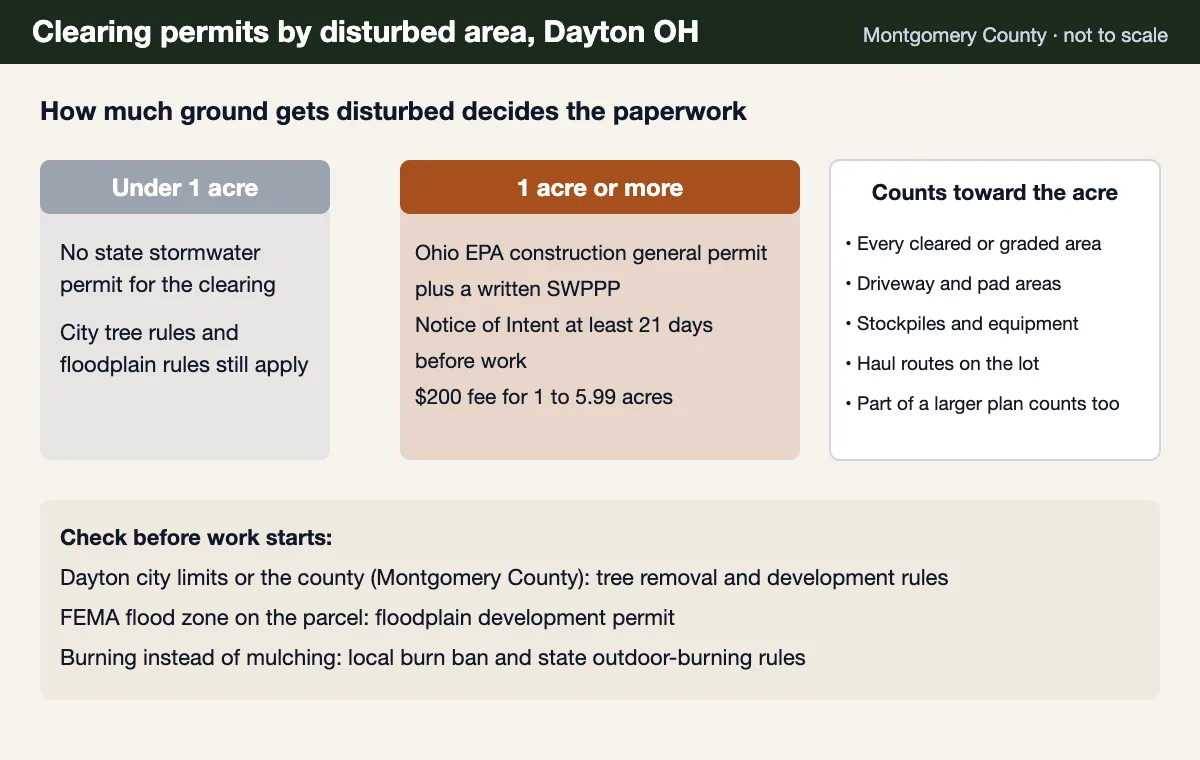
Ohio EPA requires a construction stormwater permit when a project disturbs one acre or more of ground, or is part of a larger common plan of development or sale that will ultimately disturb one acre or more, and stormwater from the site discharges to waters of the state. That second clause catches more projects than people expect: three separate third acre lots inside one subdivision plan are treated as part of the same common plan, not as three sub acre projects.
The point that matters most for anyone hiring a clearing contractor is what counts as disturbance. Ohio EPA’s own small business guidance on construction stormwater states plainly that clearing and grubbing activities are considered land disturbance. Taking the vegetation off the ground is not a preliminary step that happens before the regulated work begins. It is part of it.
Ohio EPA construction activities stormwater general permit →
Ohio EPA small business fact sheet on construction stormwater →
Ohio EPA stormwater program overview →
Notice of Intent timing and fees
Coverage under the general permit is not automatic. An operator submits a Notice of Intent, pays the applicable fee, and receives written approval of coverage from the director of Ohio EPA. The NOI goes in at least 21 days before construction activity starts, so on any project with a fixed build date that 21 days needs to be in the programme from the beginning rather than discovered in week one.
| Item | Requirement | Notes |
|---|---|---|
| Trigger | 1 acre or more disturbed | Or part of a larger common plan of development or sale reaching 1 acre |
| Notice of Intent | At least 21 days before work starts | Coverage requires written approval from the director of Ohio EPA |
| Base NOI fee | $200 for 1 to 5.99 acre sites | Larger sites pay more; local fees are separate |
| Plan required | Stormwater Pollution Prevention Plan | Prepared for the site, not a generic document |
| Clearing status | Clearing and grubbing count as land disturbance | Stated in Ohio EPA small business guidance |
| Possible relief | Waivers and exclusions in the 1 to 5 acre range | Including a rainfall erosivity waiver and a routine maintenance exclusion; applied for, not assumed |
Confirm current requirements and fees directly with Ohio EPA before relying on them. Rules and fee schedules change, and the agency pages linked above are the authoritative source.
Why You Cannot Simply Burn the Brush
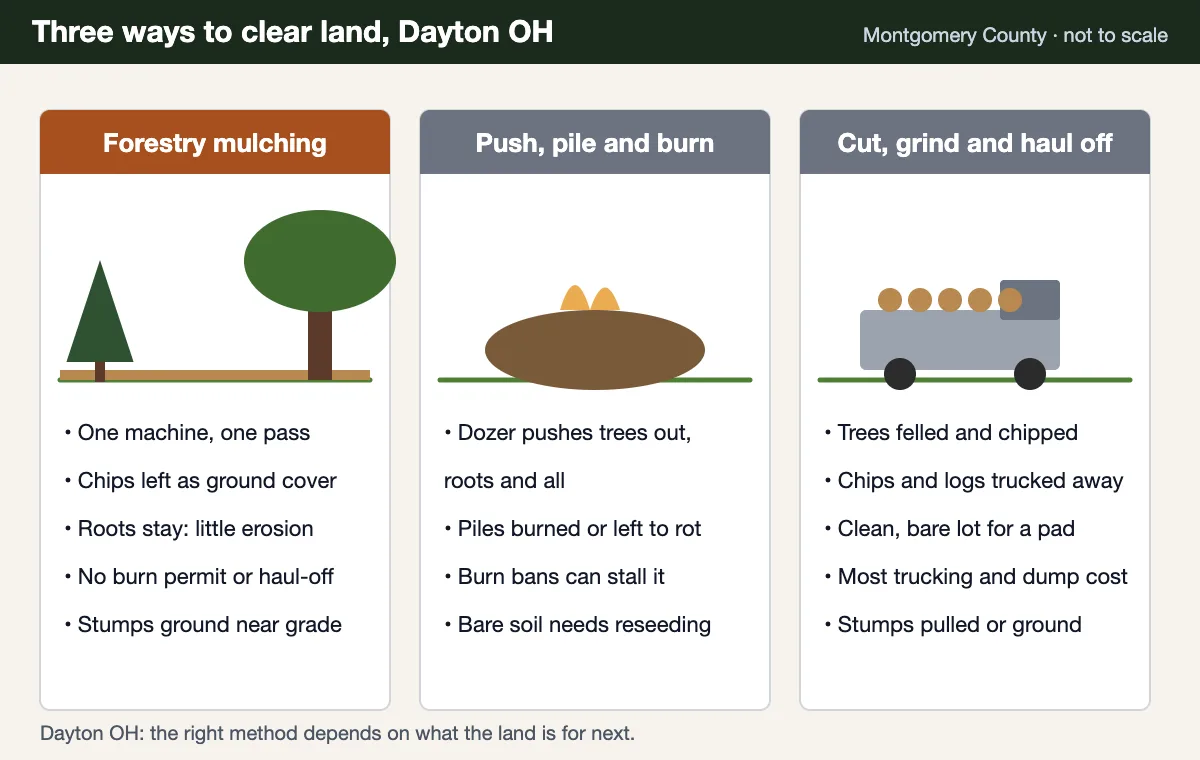
Burning is the traditional ending for cleared brush and in Ohio it has been narrowed to almost nothing. Three separate layers of rule apply, and a property can be caught by all three at once.
Inside Dayton city limits
The City of Dayton states that open burning is generally prohibited within the city, with just a few exceptions, or unless a permit has been issued. Permits are handled through the city, and the regional air agency also has a role in open burning oversight for this area.
City of Dayton open burning rules →
Regional Air Pollution Control Agency open burning information →
Statewide, under Ohio EPA rules
Ohio EPA treats land clearing waste as a category requiring written permission from the agency before it is burned, and sets a minimum separation of 1,000 feet from inhabited buildings. On a suburban lot that distance requirement alone settles the matter. The governing rules sit in the Ohio Administrative Code.
OAC 3745-19-03, open burning in unrestricted areas →
OAC 3745-19-04, open burning in restricted areas →
Ohio EPA open burning fact sheet →
The ODNR seasonal ban
On top of all that, Ohio Revised Code 1503.18 (enforced by the Ohio Department of Natural Resources) bans open burning between 6 a.m. and 6 p.m. in unincorporated areas during March, April, May, October and November. In those daytime hours burning is permitted only in a plowed field or garden at least 200 feet from woodland or brush, which by definition excludes burning land clearing waste. Those five months include most of the season people actually want to clear in.
Other Checks Worth Making Before You Clear
Call before you dig
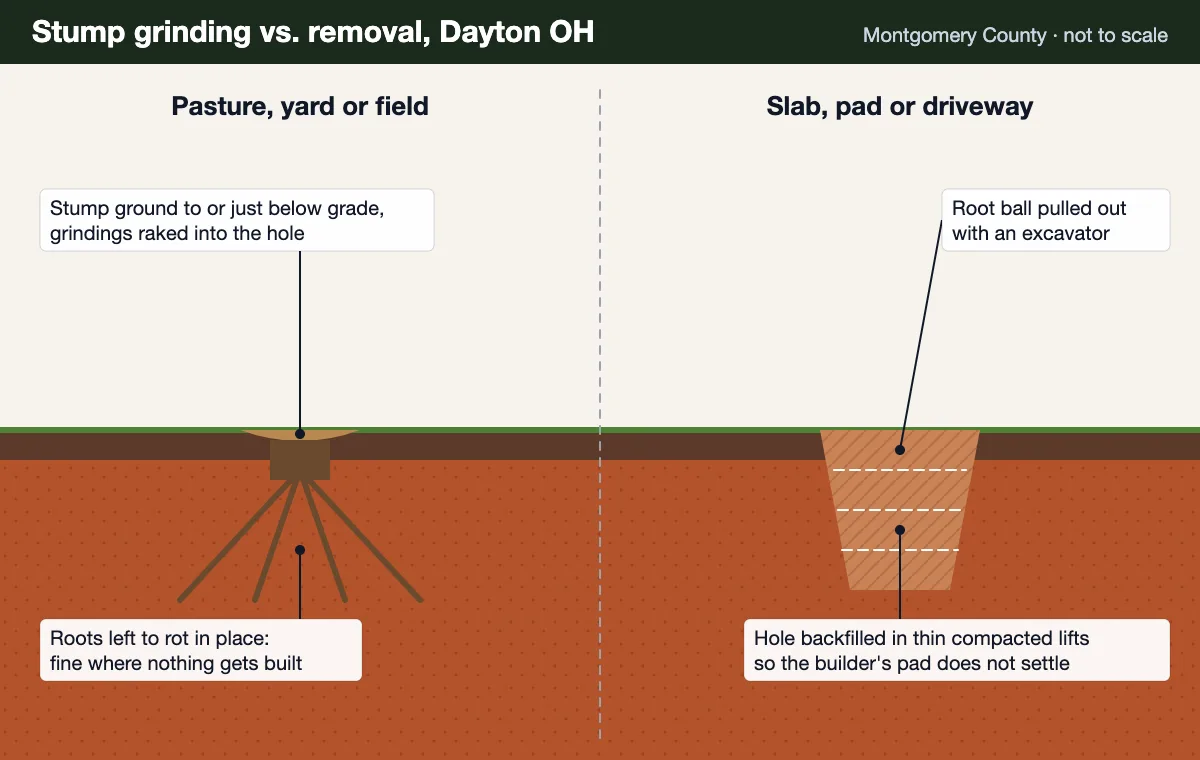
Mulching itself works above grade, but the moment a project involves stump grinding, grubbing, trenching or any excavation, utility location comes first. Ohio Utilities Protection Service handles that statewide.
Ohio Utilities Protection Service, Ohio 811 →
Know your soil before you commit to a date
Soil drainage decides whether a winter job is ideal or damaging. Montgomery County is the type location for the well drained Miamian series, while the related Miami series carries a perched seasonal high water table 2 to 3 feet down from December through April. You can look up exactly what is under your parcel.
USDA Web Soil Survey →
USDA Official Series Description, Miamian series →
USDA Official Series Description, Miami series →
Local rules sit on top of state rules
Nothing above replaces your municipality or township. Zoning, tree ordinances, floodplain overlays, riparian setbacks and subdivision covenants are all separate questions, and they vary between Montgomery, Greene, Warren and Miami counties and between the cities inside them. Ask locally before you book work that will be hard to undo.
- Work out total disturbance, including anything that is part of a larger common plan of development or sale
- If it reaches one acre, file the Ohio EPA Notice of Intent at least 21 days ahead
- Budget the $200 base NOI fee for a 1 to 5.99 acre site, plus the cost of preparing the SWPPP
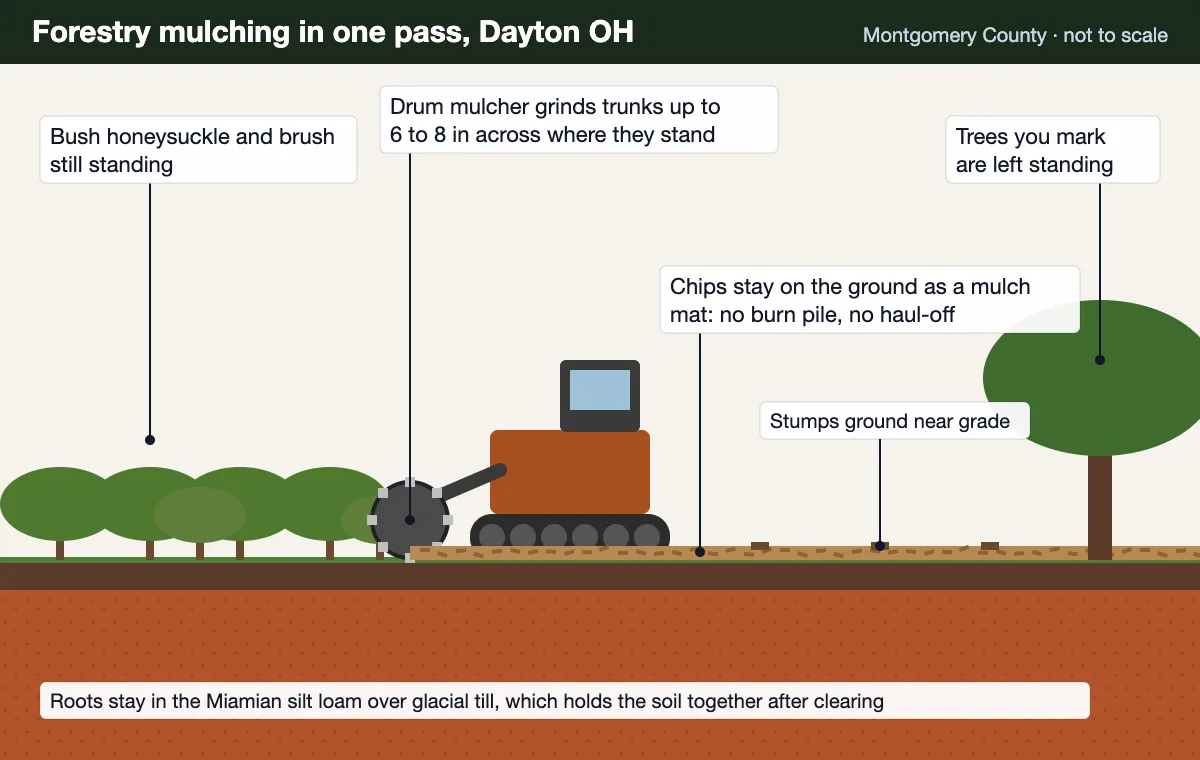
- Assume burning is not available, and plan for the material to stay on site as chip
- Contact Ohio 811 before any part of the work involves ground disturbance
- Check municipal or township zoning, tree and floodplain rules separately
- Check soil drainage and recent rainfall before committing to a December to April date
How This Changes What You Should Ask a Contractor
A clearing contractor cannot issue your permit, and should not be telling you that you do not need one. What they can do is tell you accurately how much ground their scope disturbs, whether the work is part of a construction project, and what happens to the material afterwards. If those three answers are vague, the quote is vague.
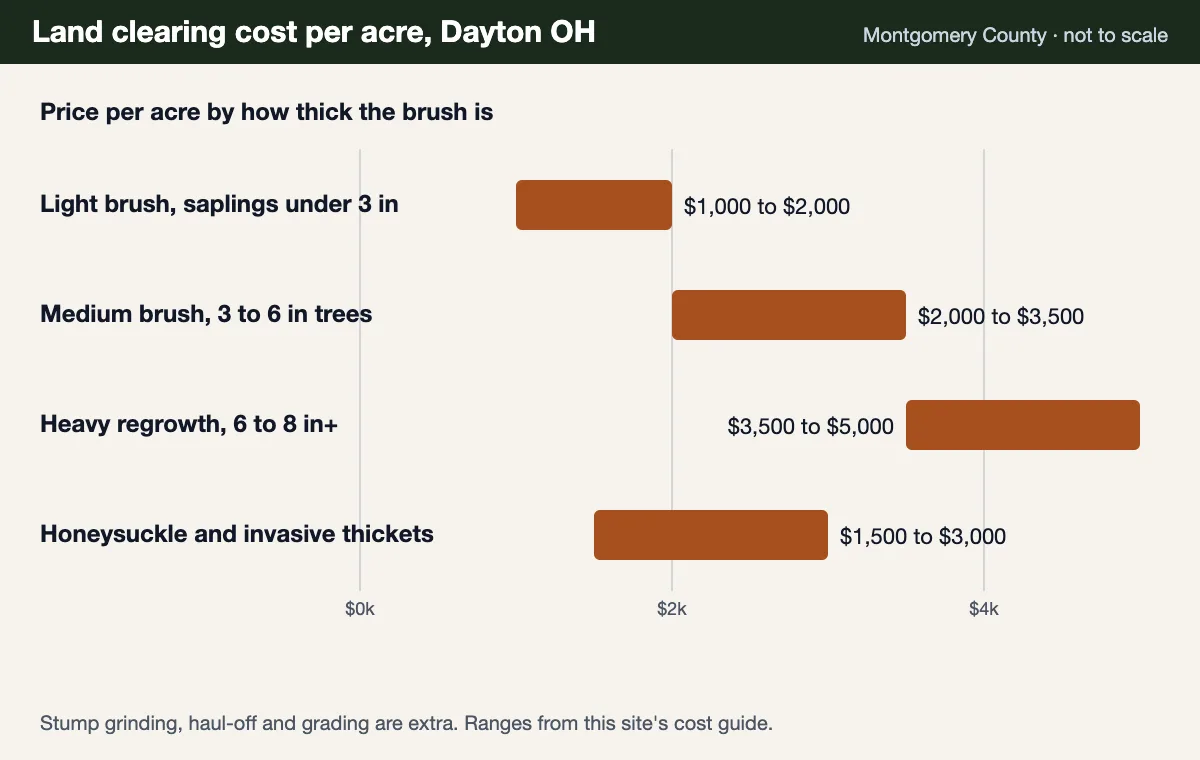
On our side that means the written scope names the acreage and says plainly that the material stays on site as chip. Where a project is clearly heading past an acre ahead of a build, we say so on the walk. The practical side of that work is on the land clearing page, and the costs are broken down in the cost guide.
We work across the towns listed on the service area page. If you want a read on whether your project crosses the acre line, send the details through the contact form and we will tell you what we think and point you at the agency page that decides it.