Identifying Bush Honeysuckle in the Miami Valley
Start with the calendar, because it is the most reliable identification tool available to a property owner and it needs no botanical knowledge at all. OSU Extension notes that invasive bush honeysuckles leaf out earlier in the spring and retain their leaves later into the fall than most native trees and shrubs. In practice that means a Miami Valley woodlot in mid November where the canopy is bare and the shrub layer beneath it is still solidly green is a honeysuckle stand, with very few exceptions.
The physical characteristics
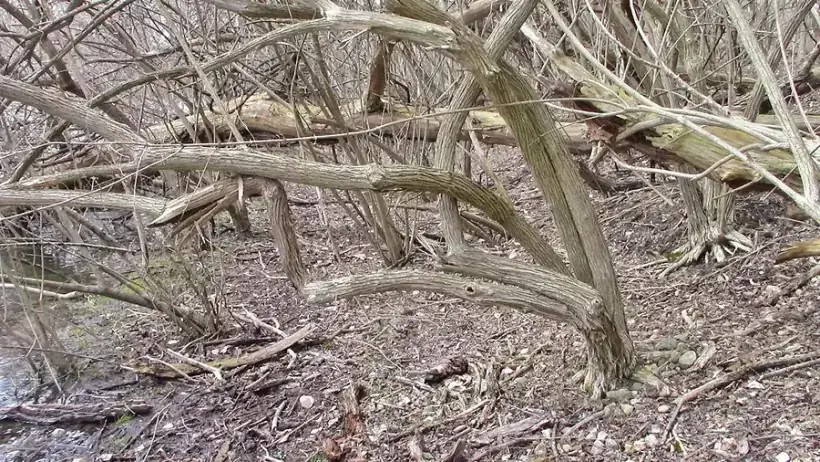
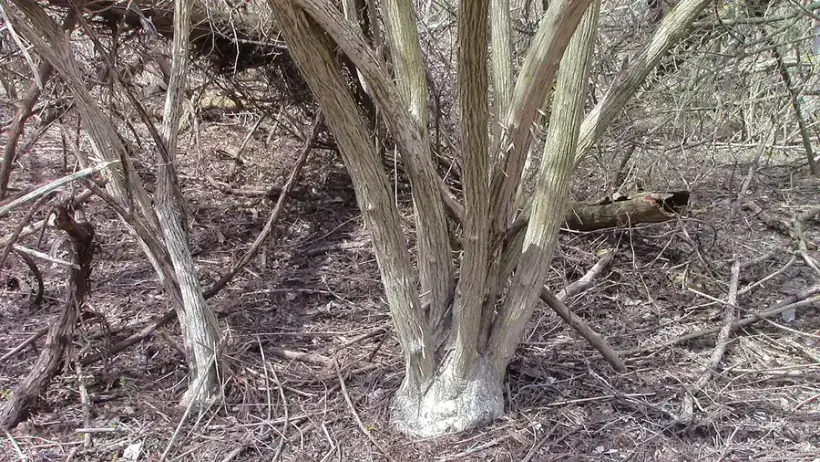
- Multiple stems rising from a single root crown rather than one trunk
- Paired, opposite leaves along the stem
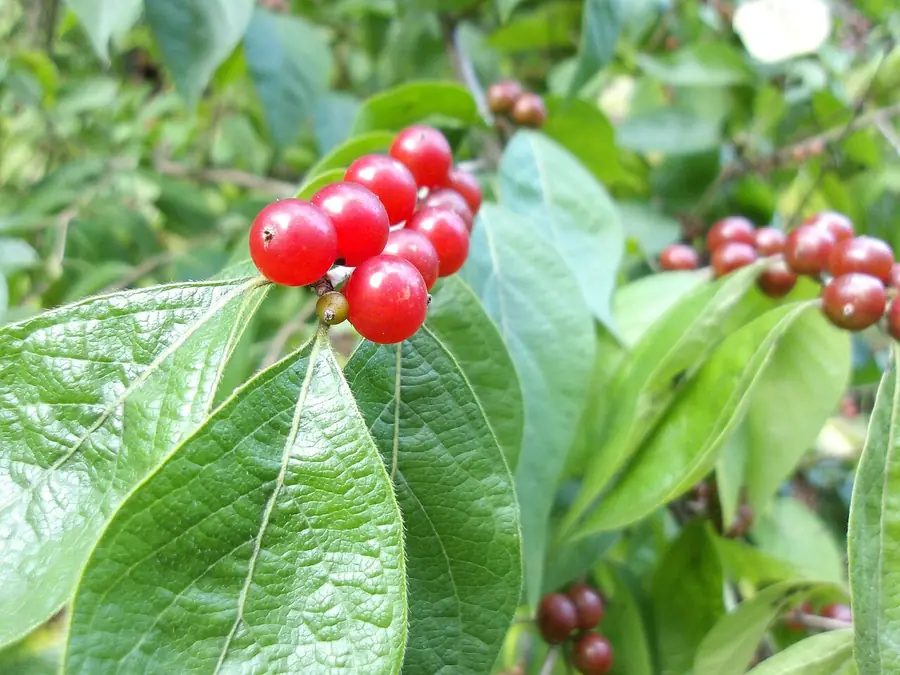
- Small red or orange berries in autumn, stripped quickly by birds
- Arching, sprawling growth form that closes horizontal space rather than growing tall
- Stands with effectively nothing growing on the ground beneath them
The four to know about
OSU Extension identifies Amur, Morrow and Tartarian honeysuckle as the invasive bush honeysuckles in Ohio forests, along with a hybrid known as Bella. From a control standpoint they behave identically, so precise separation between them matters far less than distinguishing the group from native shrubs you would rather keep. That is the identification error worth avoiding: a native spicebush or viburnum removed by mistake is a genuine loss on a site where the natives are already suppressed.
Why These Stands Form the Way They Do
Bush honeysuckle wins on light. The extended leaf season at both ends of the year gives it weeks of photosynthesis while native understory plants are dormant, and once established it shades out what would otherwise compete with it. OSU Extension describes the result directly: these shrubs can form pure, dense thickets totally void of other vegetation.
That phrase describes something specific and worth registering. It is not a shrub layer with reduced diversity. It is a shrub layer with nothing else in it. Spring wildflowers go first, then tree seedlings, and a woodlot that reaches that state stops regenerating, because nothing new can get past knee height. The mature canopy above it is effectively the last generation unless something changes.
The berry problem
The berries look like a wildlife benefit and function as the opposite. OSU Extension points out that honeysuckle berries lack the high fat content that native plants provide to migrating birds. Birds eat them regardless, because they are abundant and conspicuous, get less nutritional return than a native fruit would have given, and then carry the seed to the next woodlot. That is the dispersal mechanism, and it is why clearing your property does not stop new seedlings arriving from a neighbour’s.
What Actually Controls It
Three approaches work, and all three assume the root crown is the target rather than the stems.
Cut stump treatment
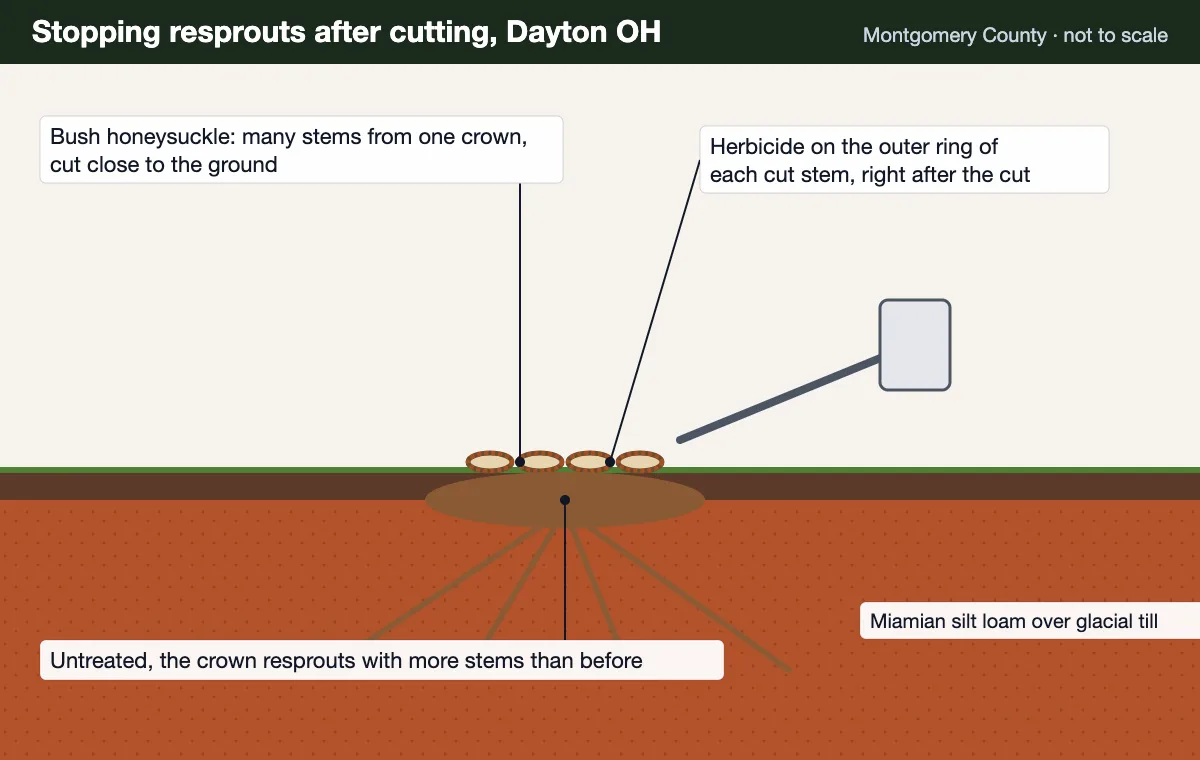
OSU Extension describes applying herbicide to the cut surface within minutes of cutting, while the stump is still actively drawing. The short window is the whole technique: wait too long and the cut surface seals and the treatment fails. It is the most selective approach available, which makes it the right choice where native plants worth keeping are interspersed through the stand. Herbicide application should be carried out by a licensed applicator.
Late fall foliar treatment
The same extended leaf season that makes honeysuckle competitive creates the opening here. OSU Extension notes that late fall foliar spraying works because the honeysuckle is still carrying leaves after the native plants have gone dormant, so the treatment reaches the target and largely misses everything else. On a dense stand covering real area this is usually the more practical route, again through a licensed applicator.
Mechanical persistence
If you would rather not use herbicide, the alternative is repetition: clear the stand, then cut the regrowth while it is small, repeatedly, across several seasons. Each cut draws down the reserves in the root crown. It genuinely works, it costs more in visits than in chemistry, and it takes longer. What does not work is cutting once and hoping.
Where Forestry Mulching Fits
Mulching is the most efficient way to get a mature stand off the ground, and it is not a control method on its own. Those two statements are both true and most contractor sites only publish the first one.
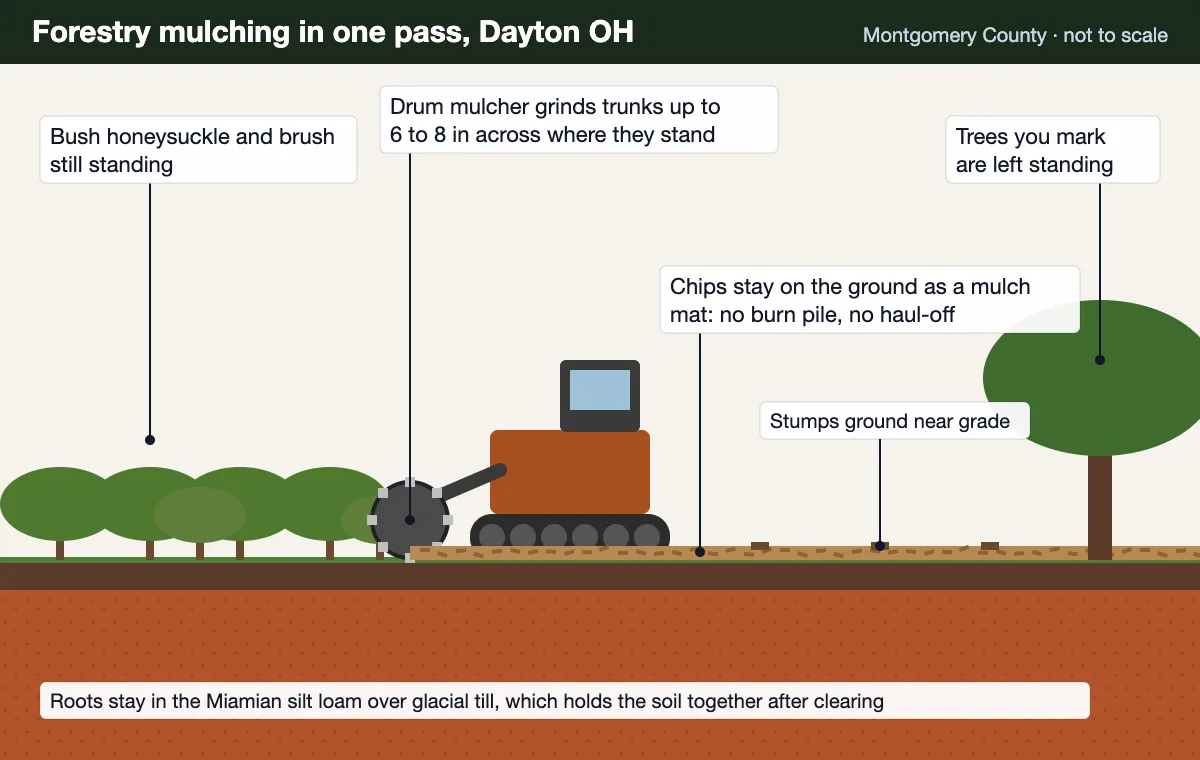
What mulching does well: it reduces an impassable thicket to walkable ground in a single operation, it leaves no brush pile to dispose of at a time when Ohio burning rules make disposal difficult, it reaches stems a person with a saw cannot get to, and it converts a stand of mature multi stemmed shrubs into small weak resprouts that are far cheaper to treat than what they replaced. On a Miami Valley woodlot that has been left for a decade, nothing else opens the site at comparable cost.
What mulching does not do: it does not kill root crowns. OSU Extension’s warning about cutting applies to any mechanical removal of the stems. The realistic sequence is mulching first, treatment or repeat cutting of the regrowth in the following season, and monitoring for at least a year, which is the minimum OSU Extension recommends. The service detail is on the honeysuckle removal page.
| Stage | Timing | What happens |
|---|---|---|
| Assess | Late autumn, while it is still green | Extent of the stand is visible against bare woods; natives worth keeping identified |
| Clear | Dormant season, on firm or frozen ground | Mulching reduces the standing thicket to chip in place |
| Treat | Within minutes of cutting, or late the following fall | Cut stump or foliar treatment by a licensed applicator, or plan mechanical repeats |
| Re-treat | Following season | Resprouts are small and weak, and far cheaper to deal with than the original stand |
| Monitor | At least one year, realistically ongoing | Seed in the soil and birds from neighbouring ground keep bringing it back |
Timing guidance follows OSU Extension fact sheet F-68. Ground condition caveats follow the USDA soil series descriptions for this area, where a perched seasonal high water table sits 2 to 3 feet down from December through April.
Callery Pear, the Other Ohio Listed Invasive
Callery pear belongs in the same conversation and frequently in the same thicket. Ohio listed Pyrus calleryana as an invasive species under the Ohio Administrative Code and prohibited its sale and distribution from January 7, 2023, which made Ohio the first state to ban the tree outright. The ban stops new sales, but it does nothing about the ornamental trees planted across decades whose offspring have escaped into field edges, fence rows and old pasture.
Wild callery pear is thorny, fast and dense, it resprouts from a cut stem like honeysuckle does, and it responds to the same multi season logic.
OAC 901:5-30-01, Ohio invasive plant species list →
Ohioline ANR-0218, callery pear identification and management →
Timing It Against Miami Valley Ground
The dormant season is both the best time to see a honeysuckle stand and the time the ground is most likely to be saturated. Montgomery County is the type location for the well drained Miamian soil series, but the related Miami series carries a perched seasonal high water table 2 to 3 feet below the surface from December through April, and sits in a sequence with the somewhat poorly drained Crosby and Conover soils and the poorly drained Brookston soils that occupy the depressions.
Practically: frozen ground in that window is the best condition of the year for this work, and saturated ground in the same window is the worst. You can check what is under your own parcel before scheduling anything.
USDA Web Soil Survey →
USDA Official Series Description, Miami series →
- Walk the property in mid to late November and photograph anything still green
- Check whether anything at all is growing on the ground beneath the shrub layer
- Look for multiple stems from a single base, the signature of a root crown
- Identify any native shrubs mixed in that you would want protected during treatment
- Check whether neighbouring ground is infested, since it governs reinfestation pressure
- Note whether anyone has cut the stand before, because cut stands come back denser
- Decide in advance whether herbicide is acceptable to you, since it changes the plan
Getting Help With It
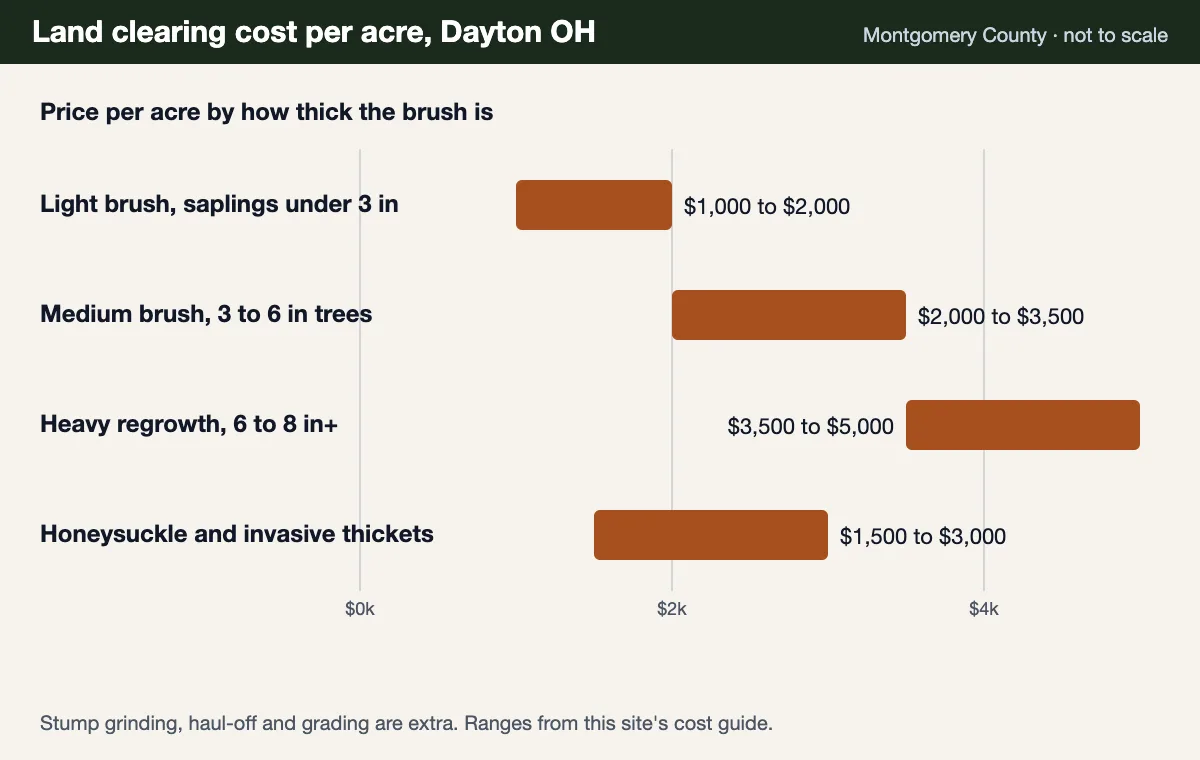
We clear invasive stands across Dayton and the Miami Valley and we will give you a straight read on what the following season needs rather than a one visit promise. The clearing side is covered on the honeysuckle removal page, the method behind it on the Dayton forestry mulching page, and the pricing in the cost guide. Towns we cover are listed on the service area page, and photographs of your stand sent through the contact form are usually enough for us to tell you what you are dealing with.