Why Bush Honeysuckle Took Over the Miami Valley
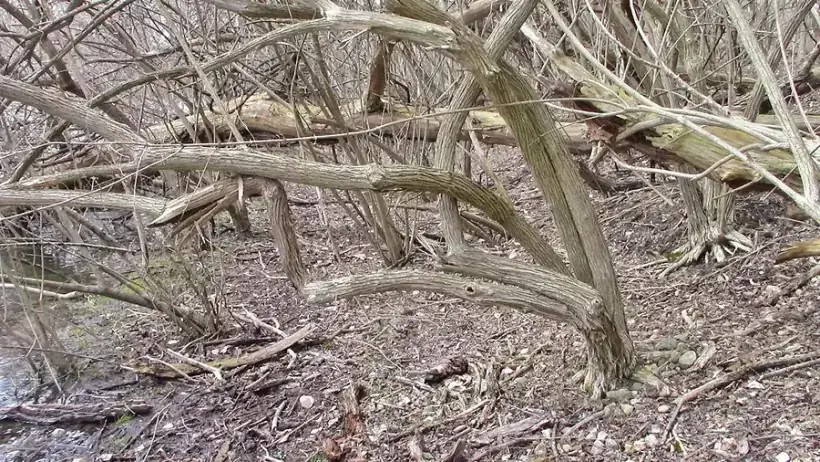
Bush honeysuckle wins here because it outcompetes natives at both ends of the growing season. OSU Extension notes that these shrubs leaf out earlier in the spring and retain their leaves later into the fall than most native trees and shrubs, which hands them weeks of light at times when the canopy above is bare and the native understory is dormant. Over a few years that advantage compounds into what the same fact sheet describes as pure, dense thickets totally void of other vegetation.
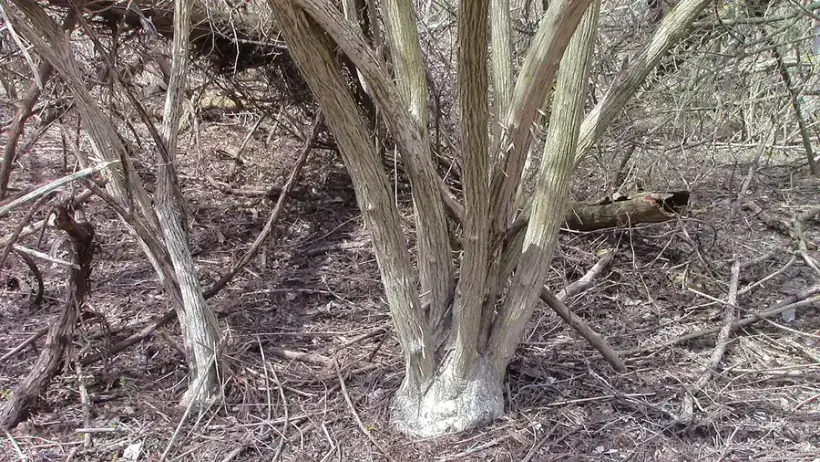
Ohio has four to contend with. OSU Extension identifies Amur, Morrow and Tartarian honeysuckle as the invasive bush honeysuckles in Ohio forests, along with a hybrid known as Bella. For removal purposes the distinction barely matters, because all of them grow multi stemmed from a root crown and all of them respond to cutting the same way.
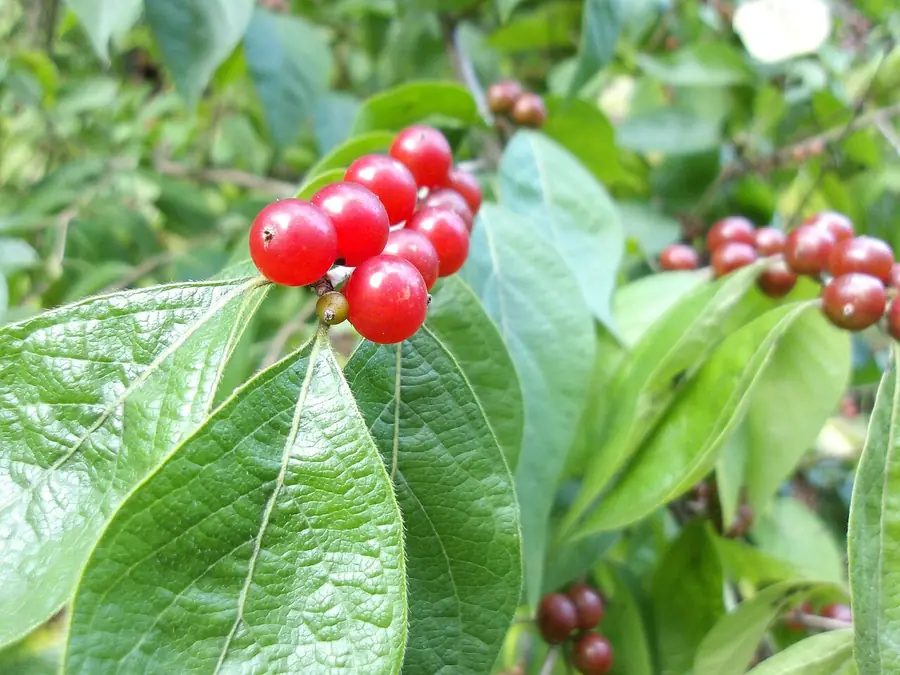
The berries are the other half of the story. They look like a wildlife resource and they are not: OSU Extension points out that honeysuckle berries lack the high fat content that native plants provide to migrating birds. The birds eat them anyway and carry the seed onto the next property, which is why a cleared site next to an uncleared one is never permanently clean.
The Part Most Contractors Leave Out
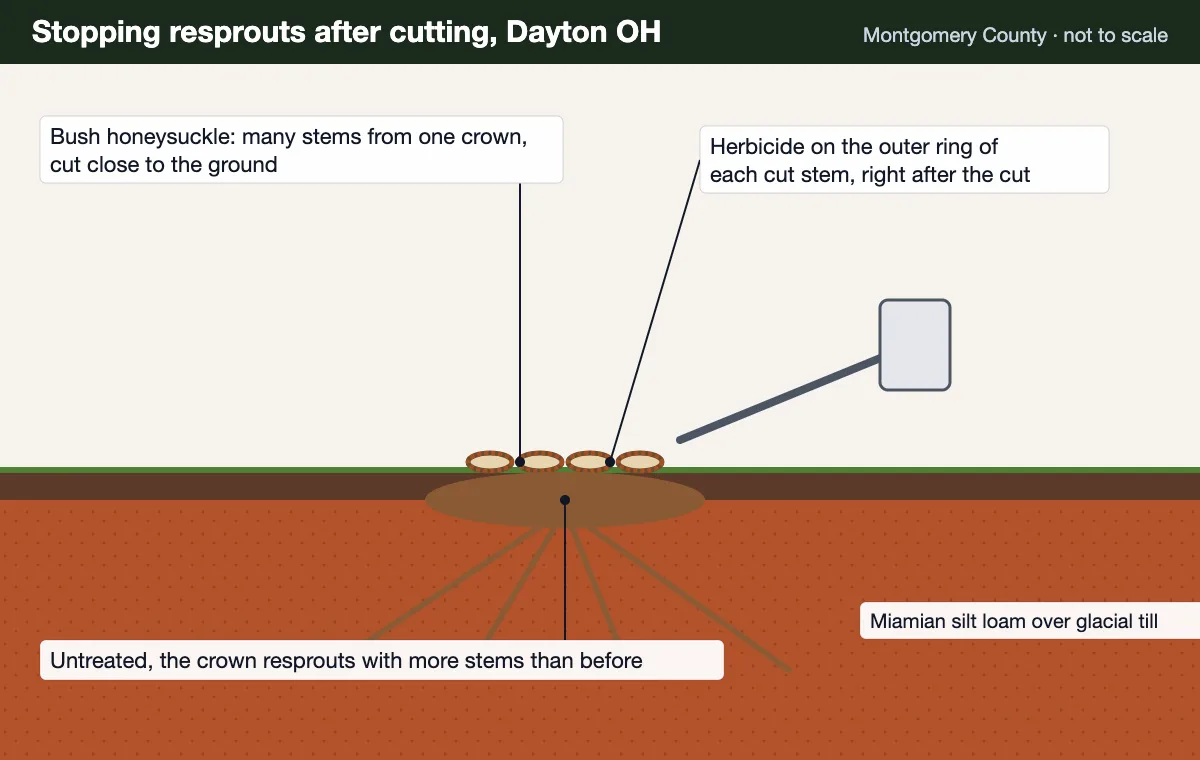
Cutting bush honeysuckle makes it worse before it makes it better. OSU Extension states it without hedging: simply cutting the shrub off at the base will cause prolific sprouting and increase the number of stems. The root crown is not damaged by cutting, it is triggered by it, and what comes back is denser than what was there.
That does not make mulching pointless. It makes mulching step one of a plan instead of the whole plan. Mulching gives you the site back immediately, turns an impassable thicket into walkable ground, and reduces a stand of mature multi stemmed shrubs to small, weak resprouts that are far cheaper to deal with than what they replaced. What it does not do is end the problem in an afternoon, and we would rather say that on the quote than after the second season.
How Honeysuckle Removal Actually Runs
Six steps across two seasons. The first three give you your ground back. The last three are what keep it.
- 1Confirm what you actually have
Amur, Morrow and Tartarian honeysuckle all behave the same way and all get treated the same way, but callery pear, multiflora rose and native shrubs sit in the same thickets. We identify the stand before pricing it.
- 2Time it to the dormant season if we can
Bush honeysuckle leafs out earlier in spring and holds its leaves later into fall than most native trees and shrubs, so in late autumn the infestation lights up green against bare woods. That is the easiest time to see the full extent of it.
- 3Mulch the stand in place
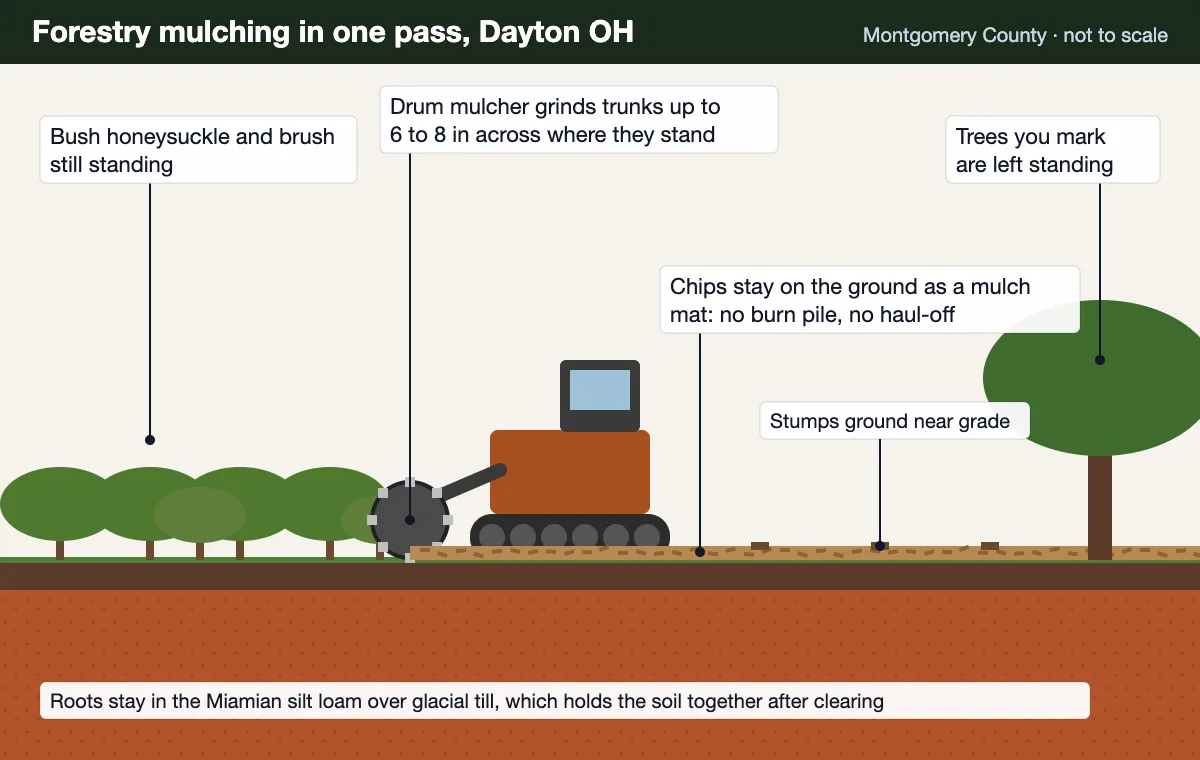
The head reduces the thicket to chip where it stands. Honeysuckle stems are small but the stem counts are enormous, so this is slow, dense work rather than a fast pass over open ground.
- 4Plan the follow up before we leave
This is the step that actually decides the outcome. OSU Extension is clear that cutting alone causes prolific sprouting, so we set out what the next season needs: either cut stump or foliar treatment by a licensed applicator, or re-mulching the regrowth.
- 5Re-treat the regrowth
Resprouts come back fast and small. Hitting them in the second season while they are still weak is far cheaper than waiting until the thicket has rebuilt itself, which takes only a few years.
- 6Monitor for at least a year
OSU Extension recommends monitoring treated plants for at least one year. Berries already in the soil and birds moving seed in from neighbouring ground mean a cleared site is never permanently finished, only managed.
Cut stump treatment
OSU Extension describes cut stump treatment as applying herbicide to the cut surface within minutes of cutting, while the stump is still actively drawing. The timing window is genuinely that short, which is why this is a deliberate operation with a licensed applicator rather than something bolted onto the end of a mulching day. It is the most targeted approach for a scattered stand with keeper plants nearby.
Late fall foliar treatment
The same longer leaf season that makes honeysuckle competitive also makes it vulnerable. OSU Extension notes that late fall foliar spraying works because the honeysuckle is still in leaf when native plants have gone dormant, so treatment reaches the target and largely misses everything else. On a dense stand this is usually the more practical route, again through a licensed applicator.
Re-mulching the regrowth
If you would rather not use herbicide at all, the alternative is mechanical persistence: mulch the stand, then cut the regrowth repeatedly while it is small. It works, it is slower, and it takes more visits. We will price it honestly either way rather than steer you toward whichever is easier for us.
What Honeysuckle Removal Costs Around Dayton
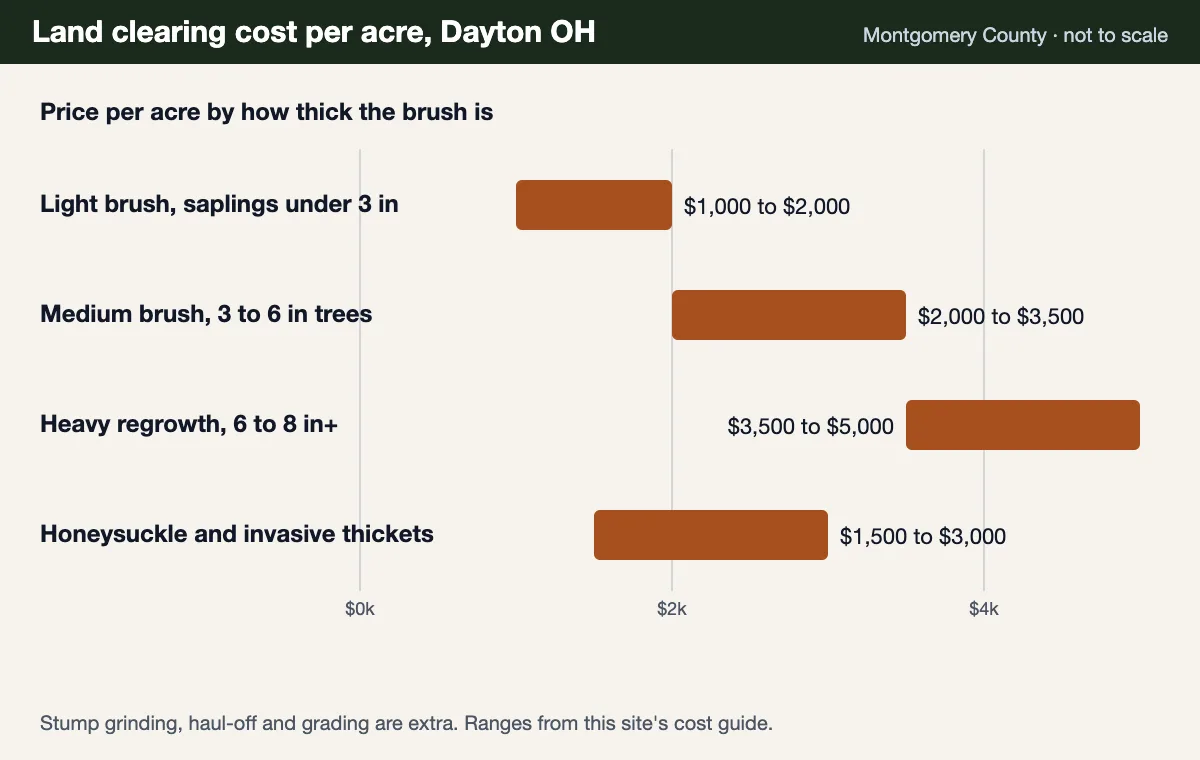
Invasive thicket work in Ohio is published at $1,500 to $3,000 per acre. That sits inside the ordinary mulching range rather than above it, for a counterintuitive reason: the stems are small, so the head is never struggling, but the counts are enormous, so the machine covers ground slowly. It roughly balances out at medium brush pricing.
Most suburban lots in Kettering, Centerville or Oakwood are a fraction of an acre, which means the mobilisation minimum of $500 to $1,000 applies instead of a per acre figure. That minimum is not padding: it is the cost of getting a tracked machine onto a trailer, to your street, and off again. The full pricing picture including density bands is in the cost guide.
- A shrub layer still fully green in late November while the woods around it are bare
- Nothing growing on the woodland floor beneath the shrubs, not even spring wildflowers
- Multi stemmed shrubs, many stems from one base, rather than single trunked trees
- Small red or orange berries in autumn that birds strip quickly
- Ground you used to be able to walk through that is now genuinely impassable
- Tree seedlings that never make it past knee height because nothing gets light
- A stand that came back thicker after someone cut it a few years ago
Callery Pear, the Other One Worth Naming
Callery pear belongs in the same conversation and usually in the same thicket. Ohio listed Pyrus calleryana as an invasive species under the Ohio Administrative Code and prohibited its sale and distribution from January 7, 2023, which made Ohio the first state to ban the tree outright. That ban stops new plantings, but it does nothing about the decades of ornamental trees already in the ground whose seedlings have escaped into field edges, fence lines and old pasture.
Wild callery pear is thorny, fast and dense, and like honeysuckle it will resprout from a cut stem. A mulching head handles it well, and the same follow up logic applies. We cover both together on the Miami Valley bush honeysuckle guide.
Honeysuckle Work Across the Miami Valley
We clear invasive stands across Montgomery, Greene, Warren and Miami counties, and the suburban lots are as common as the acreage. A quarter acre back woodlot in Centerville or Beavercreek can hold a completely solid stand. If the job is really about opening acreage rather than invasives, see land clearing in Dayton OH, and the method behind all of it is on the Dayton forestry mulching page. The towns we cover are listed on the service area page, and you can send photos of your stand through the contact form.