Where Subdivision Meets Farm Ground
Huber Heights is a city in Montgomery and Miami counties with a population of 43,439 at the 2020 census, sitting north east of Dayton. The two county split is worth knowing for anything involving local permitting, although the statewide Ohio EPA construction stormwater threshold of one acre applies the same on both sides of the line.
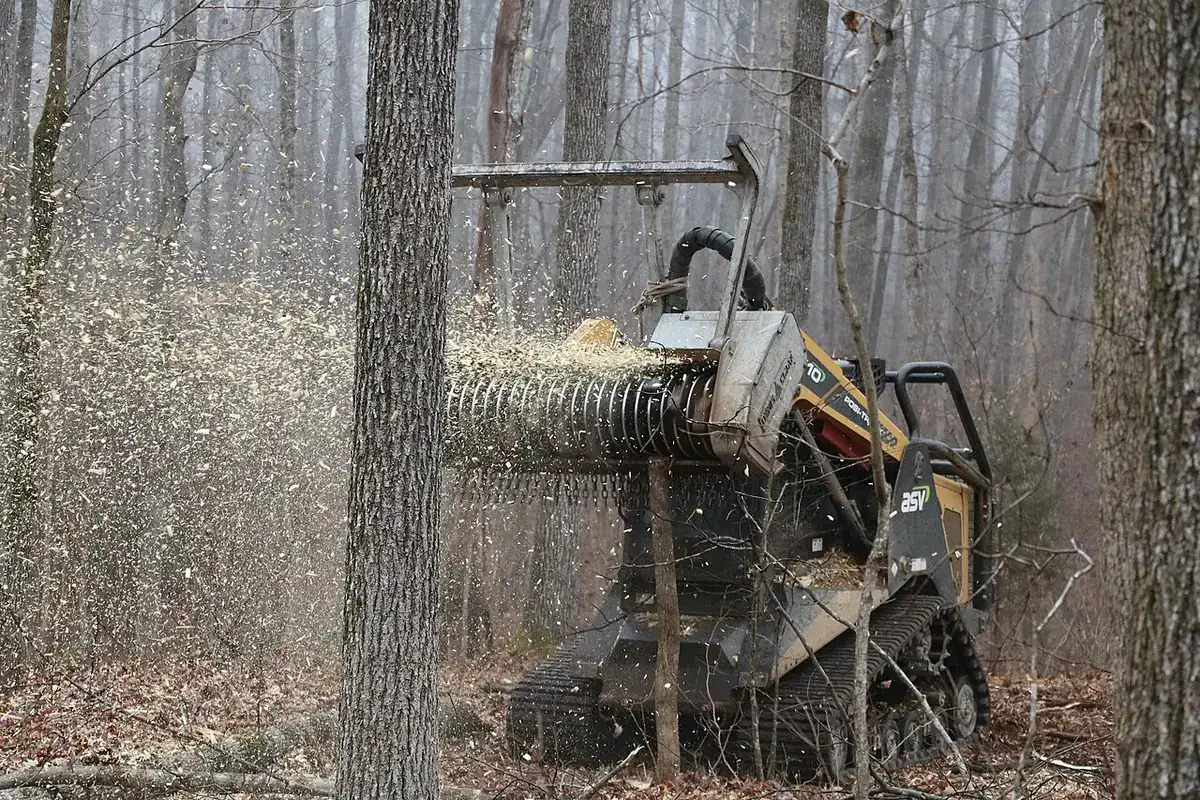
What defines the clearing work here is the boundary condition. Large residential development runs directly up against working agricultural ground, and the line between them is almost always the thing that needs clearing. Neither side mows right up to it. Multiflora rose, briars, callery pear seedlings and volunteer saplings take the strip, and within a few seasons a boundary that used to be a clean edge is a hedge nobody can walk through or see across.
Linear Work, Priced Linearly
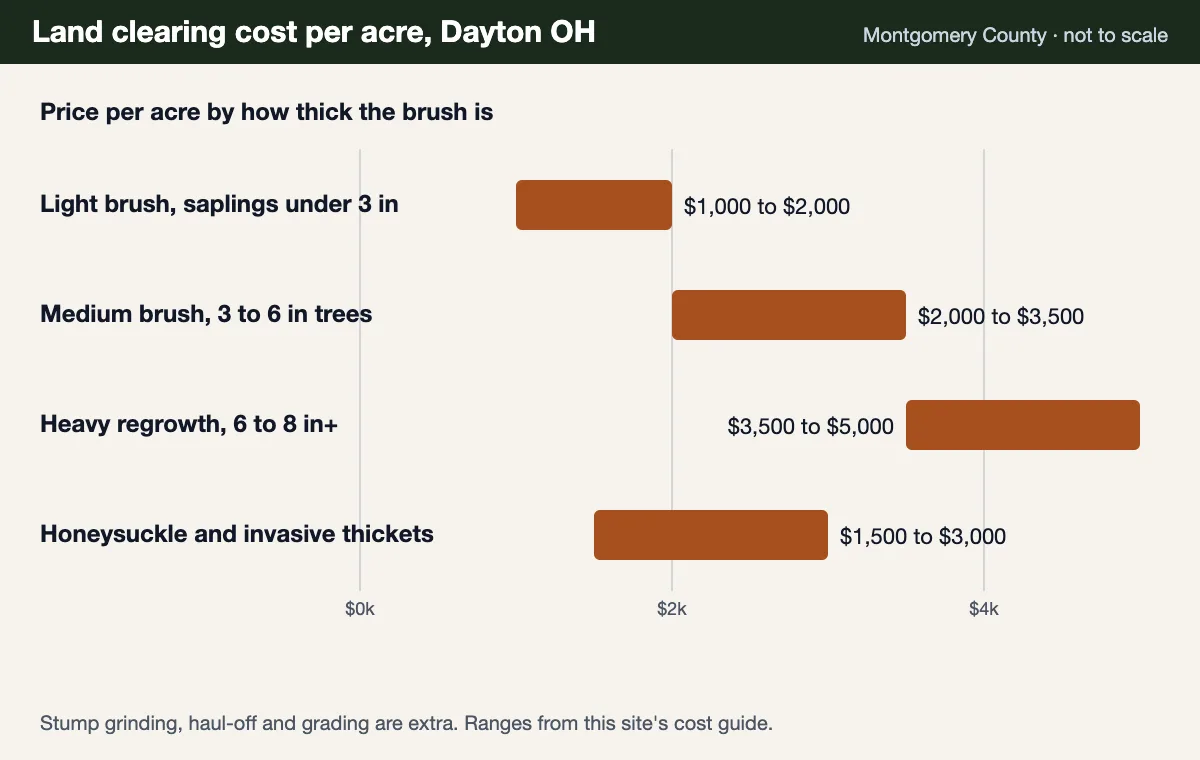
Fence line and field edge clearing is measured in feet, not acres, and it is priced by the hour or the day accordingly. Published Ohio figures put mulching at $150 to $400 per hour and $1,500 to $3,000 per day including the machine, the operator and the insurance. A long run done in one visit is far cheaper per foot than three short visits, so it is worth walking the whole property and grouping the runs before booking.
The width you finish at is the decision that matters most. A narrow cut closes back in fast. Agreeing a realistic finished width at the start, and feathering the edge rather than leaving a hard vertical wall, is what buys you years instead of seasons. That is covered in more depth on the brush and fence line clearing page.
- A rough length for each run you want cleared, measured or paced
- Knowing whether the fence is staying, being replaced, or already gone
- Any culverts, tile outlets, valves or survey markers you already know the location of
- Whether the neighbouring ground is farmed, since that affects how fast the edge refills
- Access from a road wide enough for a trailer and a tracked carrier
- Ground that is not saturated, which matters most from December through April
Ground Conditions on the North East Side
Montgomery County is the type location for the Miamian soil series, the reference site used to define that well drained soil nationally, formed in up to 18 inches of loess over loamy till with carbonates between 18 and 40 inches. On those positions a tracked machine works essentially year round.
The related Miami series constrains the calendar, carrying a perched seasonal high water table 2 to 3 feet down from December through April, alongside the somewhat poorly drained Crosby and Conover soils and the poorly drained Brookston soils in the low spots. Around field edges and drainage ways those lower positions are exactly where the work tends to be, so we check moisture before we schedule.
Larger Parcels and Clearing Before a Build
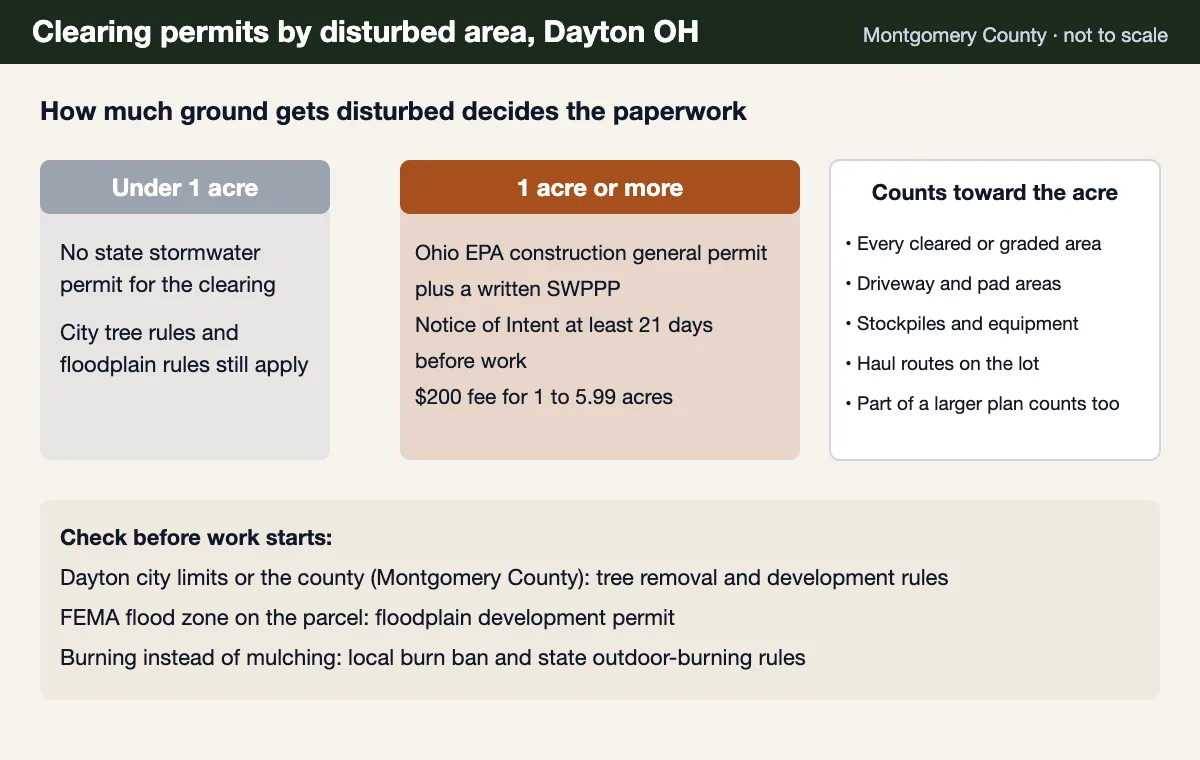
Where the job is opening acreage rather than a boundary strip, it becomes land clearing, priced by the published per acre bands and carrying a permit question if the work precedes construction. Ohio EPA guidance states that clearing and grubbing activities are considered land disturbance, which means clearing counts toward the one acre threshold on a construction project. The Notice of Intent goes in at least 21 days ahead and the base fee for 1 to 5.99 acre sites is $200. Full detail is in the Ohio permit and burning guide.
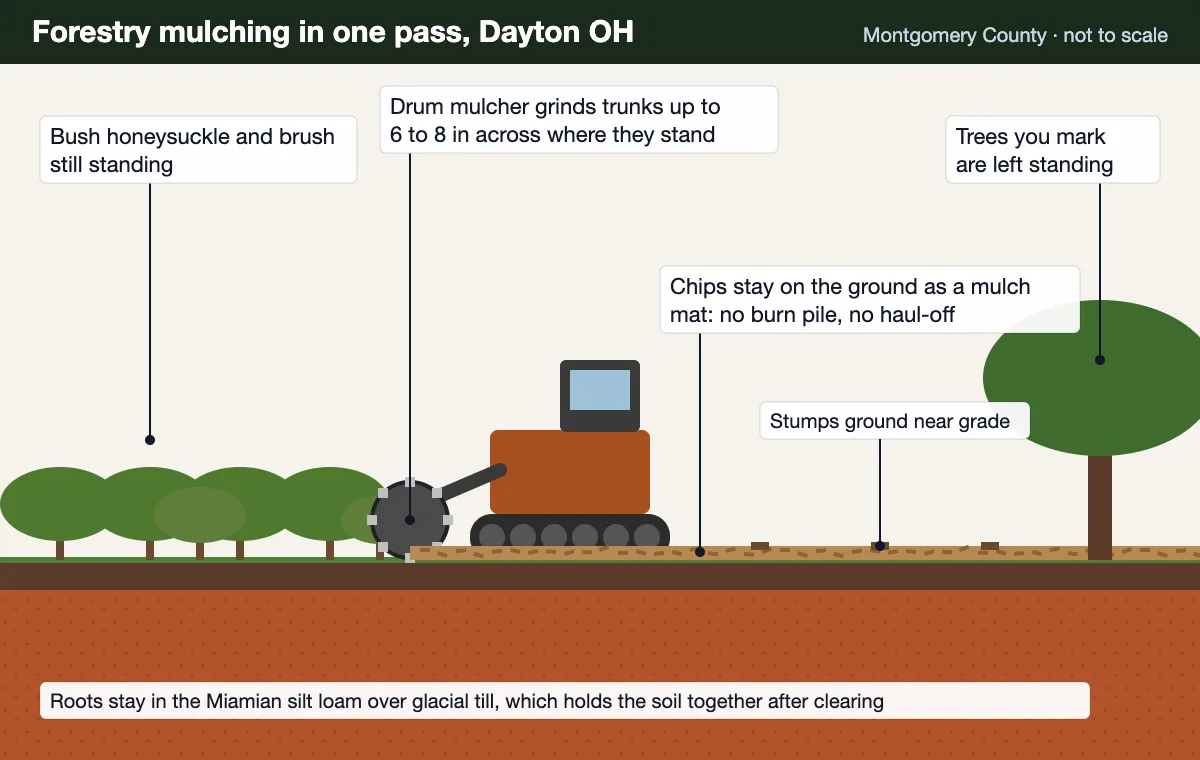
For the method behind all of it see forestry mulching in Dayton OH, and if the material turns out to be invasive shrub rather than ordinary brush, start with honeysuckle removal. Huber Heights sits alongside the other towns listed on our service area page, and you can send run lengths and photos through the contact form.