Beavercreek Sits in a Different County, and It Shows
Beavercreek is a city in Greene County with a population of 46,549 at the 2020 census, making it the largest city in that county and the second largest suburb of Dayton. That Greene County location is worth noting for clearing work, because while the Ohio EPA construction stormwater rules are statewide, local zoning and township requirements are not, and a Beavercreek parcel answers to a different set of local offices than a Montgomery County one does.
The ground itself runs a wider range here than in the inner suburbs. Beavercreek carries established residential streets with mature canopy, newer subdivisions on what was farmland, larger parcels toward the edges, and the creek corridors and wetland ground the city is named after. Each of those brings a different clearing problem.
Three Jobs We See Repeatedly in Beavercreek
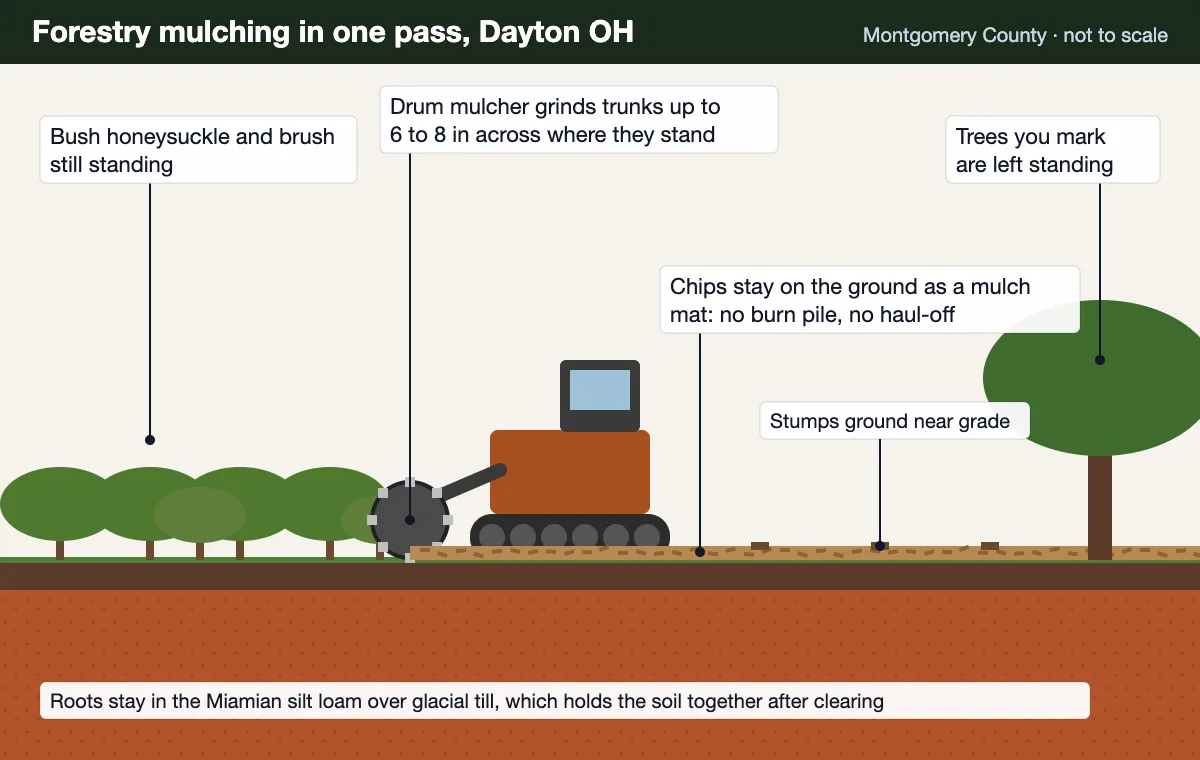
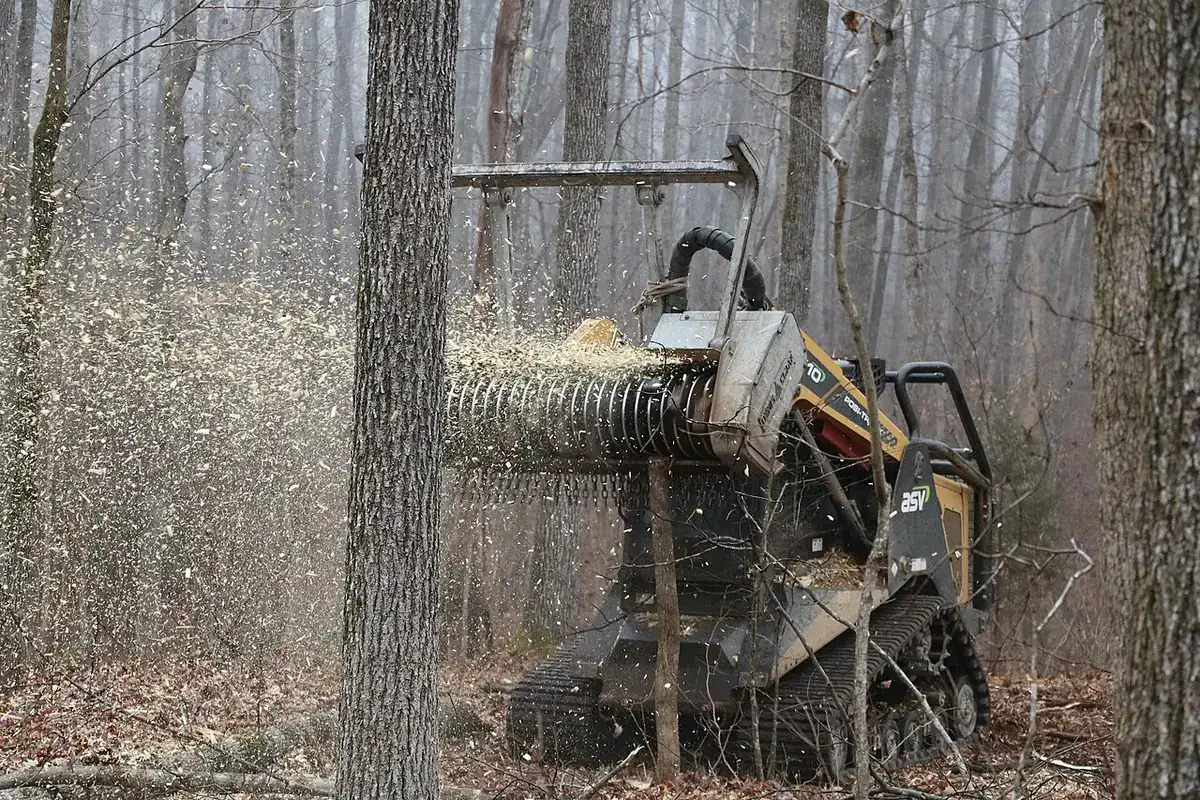
The first is the suburban back lot: mature canopy overhead, a solid honeysuckle understory beneath, and an owner who wants the trees kept and everything under them gone. Small area, high stem count, usually a day or less.
The second is the field edge on a larger parcel. Ground that used to be farmed or grazed closes in from the perimeter, taking 20 or 30 feet at a time in multiflora rose, briars, callery pear seedlings and volunteer saplings. That is edge work, priced by the hour or the day, and covered on the brush and fence line page.
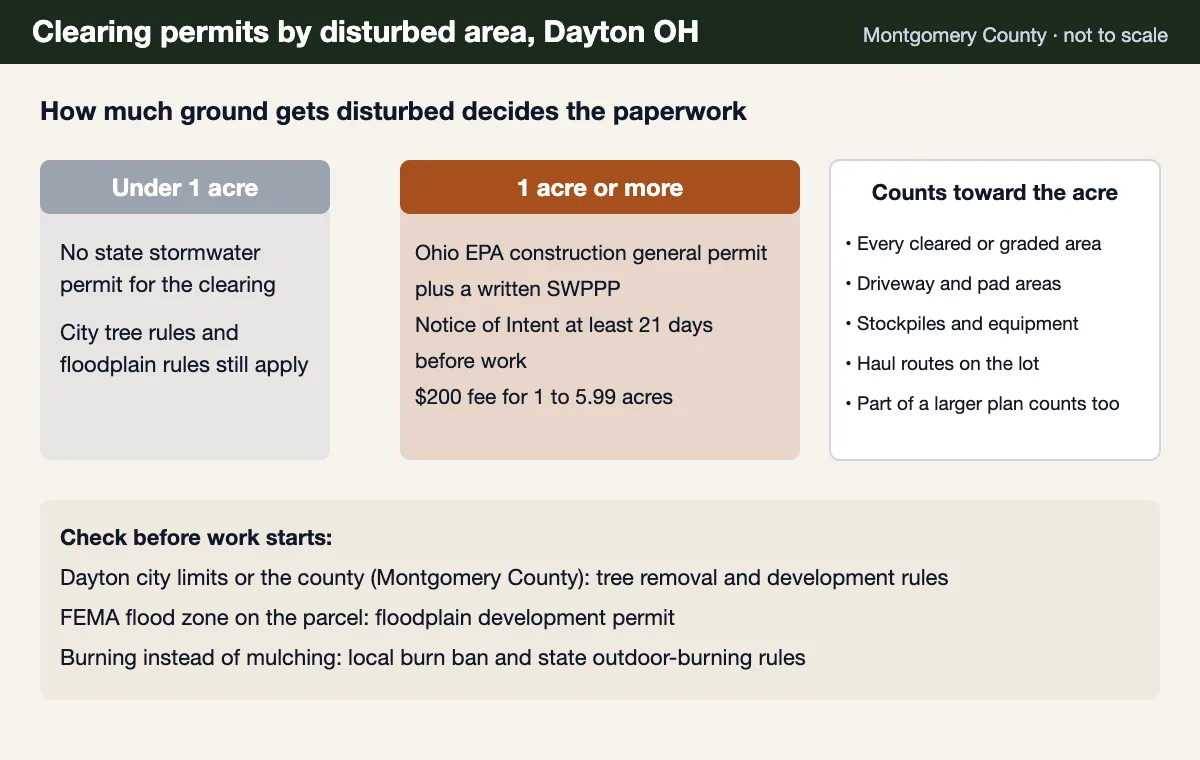
The third is clearing ahead of a build or a driveway, which is where the Ohio EPA one acre threshold becomes live. Ohio EPA guidance states that clearing and grubbing activities are considered land disturbance, so the clearing counts toward the acre when it is part of a construction project. That is set out on the land clearing page and in more detail in the Ohio permit and burning guide.
Creek Corridors and Wet Ground
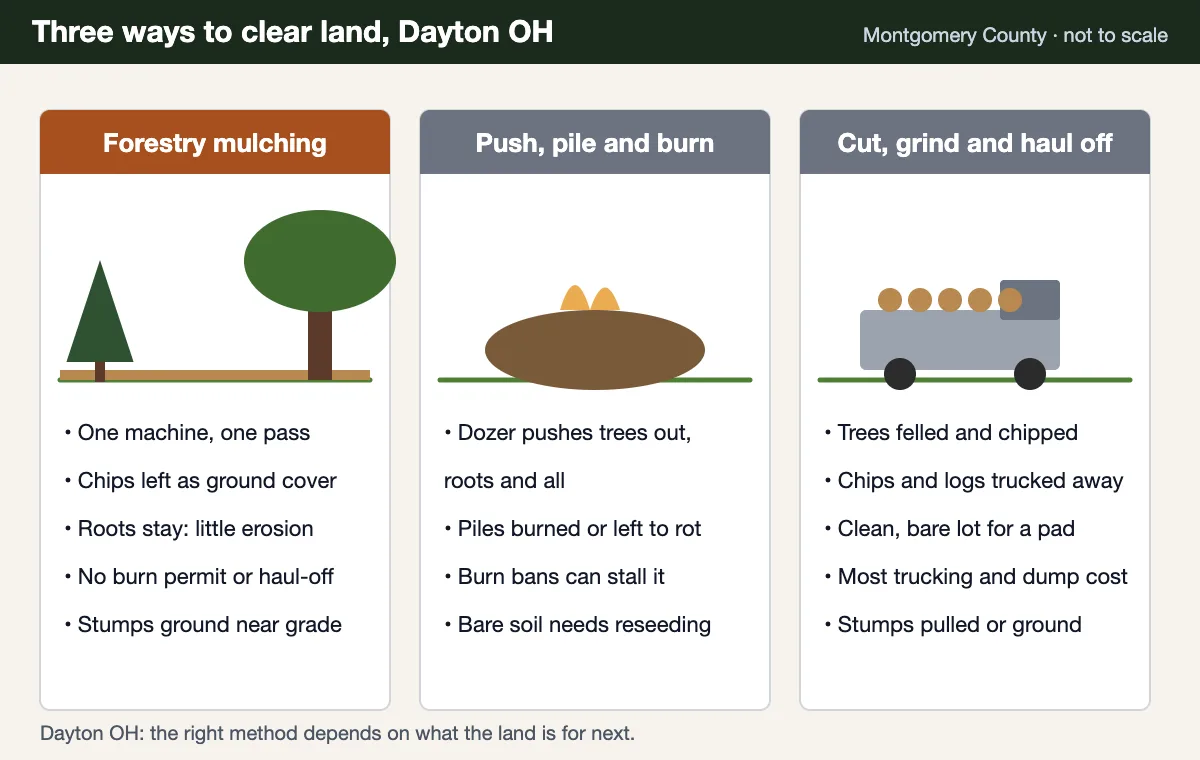
A good share of Beavercreek work touches lower, wetter ground, and that changes both method and timing. Method first: mulching leaves root systems in place and spreads chip across the surface, so a bank is covered when the machine leaves rather than exposed. Anything that scrapes leaves bare soil beside moving water, which is the wrong outcome.
Timing second: the Miami soil series through this drainage sequence carries a perched seasonal high water table 2 to 3 feet down from December through April, and it sits alongside the somewhat poorly drained Crosby and Conover soils and the poorly drained Brookston soils that fill the depressions. Frozen ground in that window is ideal. Saturated ground in the same window is the fastest way to rut a property.
- Whether the parcel is inside city limits or in the surrounding township, since local rules differ
- Whether the clearing is part of a construction project, which brings in the one acre threshold
- How close the work runs to a creek, ditch or wet area
- Access width from the road for a trailer and a tracked carrier
- Which trees are keepers, and where the property pins are
- Whether the shrub layer holds green leaves into late November, which points to honeysuckle
Across Greene County and the Miami Valley
Beavercreek is one of the four supporting areas we cover alongside Kettering, Centerville and Huber Heights, with the method and pricing bands explained on the Dayton forestry mulching page. The full list of towns is on the service area page, and you can send a Beavercreek address through the contact form for a free walk.