Land Clearing in Dayton OH Without Burning or Hauling
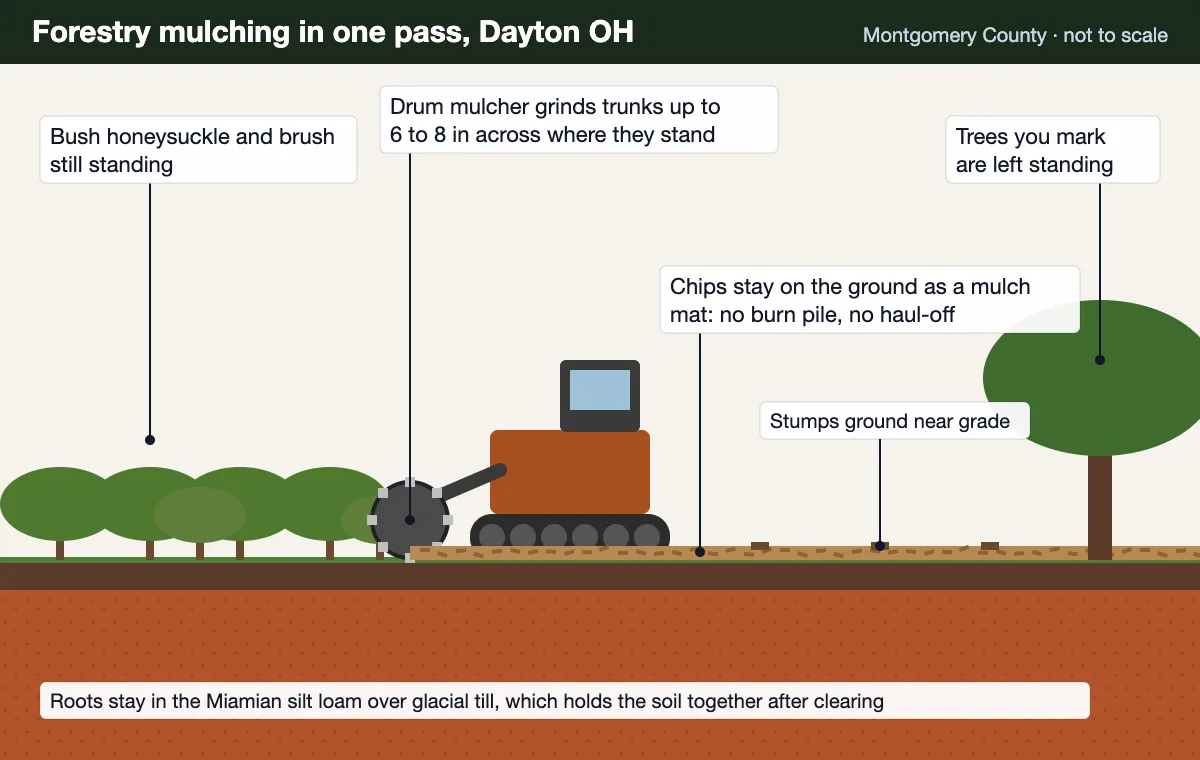
Land clearing in Dayton OH now means mulching in place for most properties, because the two traditional endings for cleared brush are both restricted in Ohio. Open burning is generally prohibited inside Dayton city limits unless a permit has been issued. Ohio EPA rules require written permission from the agency before land clearing waste is burned anywhere in the state. And the Ohio Department of Natural Resources bans open burning between 6 a.m. and 6 p.m. in unincorporated areas across March, April, May, October and November, which covers the working day for most of the clearing season.
Hauling remains legal but expensive. Every stem has to be cut, dragged, chipped or loaded, trucked and tipped, and each of those steps is a separate line on the invoice. Mulching removes the handling entirely. The material becomes chip where it stands, the chip stays on your ground, and the disposal problem simply never exists.
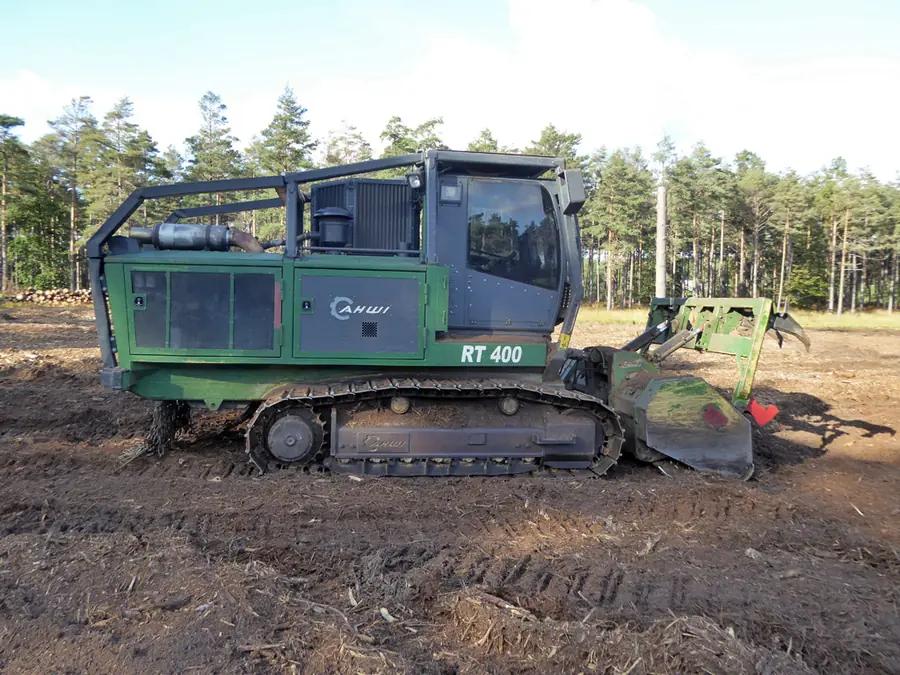
What Land Clearing Means in Practice Here
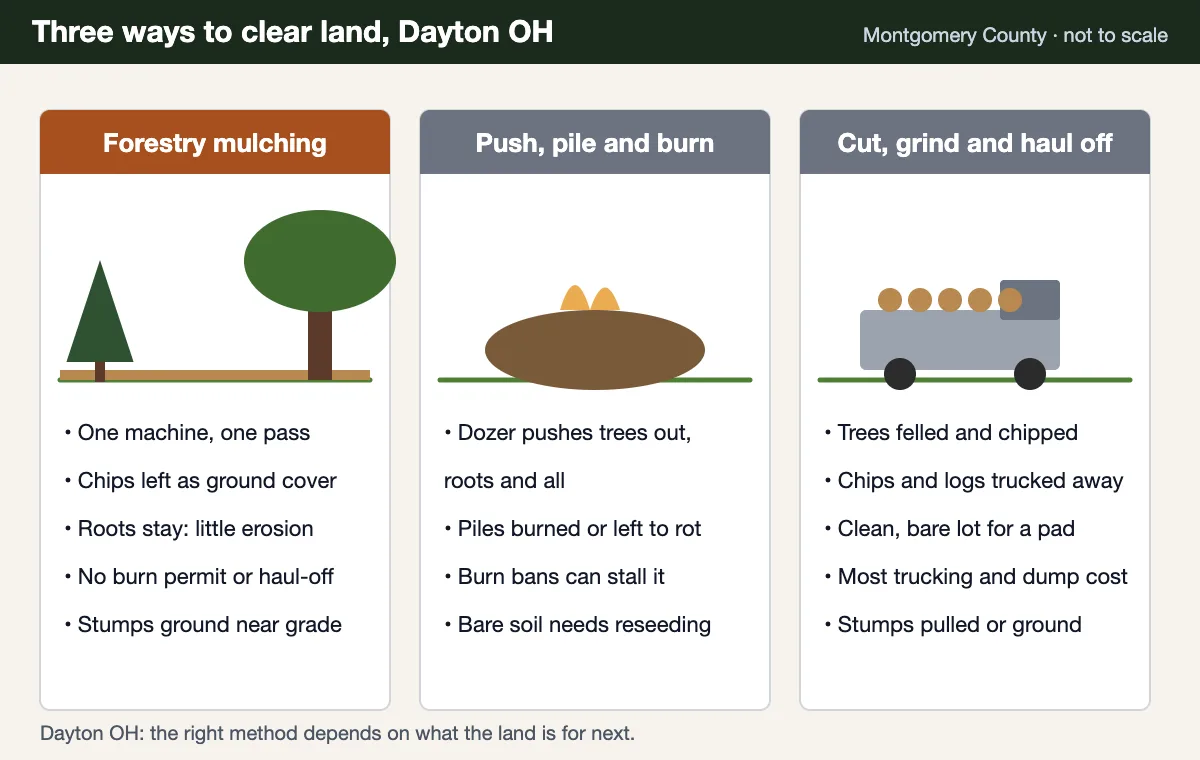
The phrase covers several different jobs, and the difference between them is how low the ground has to finish. Getting that clear at the start is what stops a project going sideways.
Lot clearing before a build
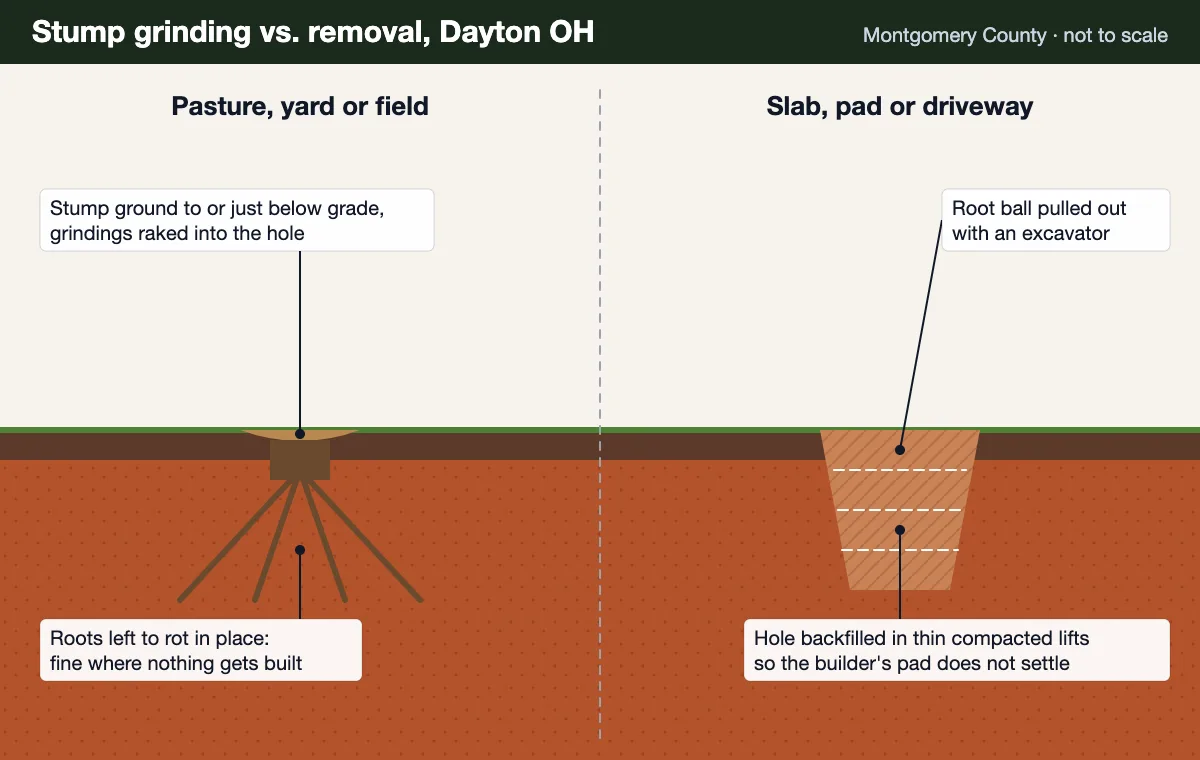
Opening a wooded or overgrown residential lot so a house, a shop or a barn can be sited. Mulching takes out the understory and the stems, and the site becomes workable and surveyable. Where a foundation is going, the stumps in that footprint still have to come out by excavation afterwards, which is a separate scope. This is also the situation where the Ohio EPA one acre question is live, because the clearing is part of a construction project.
Pasture and field reclamation
Pasture that has not been grazed or mowed for a few years starts closing in from the edges. Volunteer saplings, multiflora rose and briars push in 20 or 30 feet, then keep going. Mulching resets the whole edge in a pass and leaves chip that breaks down rather than a pile of cut stems to deal with. Stumps stay, which is fine because the ground is not being built on.
Access, driveways and utility lanes
Cutting a lane into a back parcel, reopening an overgrown driveway, or clearing a strip for a utility run. Narrow, linear work that a mulching head is well suited to. Anything in this category that involves digging goes through Ohio 811 first, without exception.
Recreational and woodlot management
Opening the understory beneath mature trees so a woodlot is walkable again, shooting lanes are visible, or the canopy you actually wanted has light and space. Selectivity is the whole point here, and it is the thing a dozer cannot offer.
How Land Clearing Runs on a Dayton Parcel
Six steps, same order every time. The permit check sits at step two deliberately, because finding out afterwards that you needed coverage is the expensive way to learn.
- 1Establish what the ground is for
A building pad, a pasture, a driveway and a recreational woodlot all end up looking different. We start from the end use, because that decides how much comes out and how low it finishes.
- 2Check the acre threshold
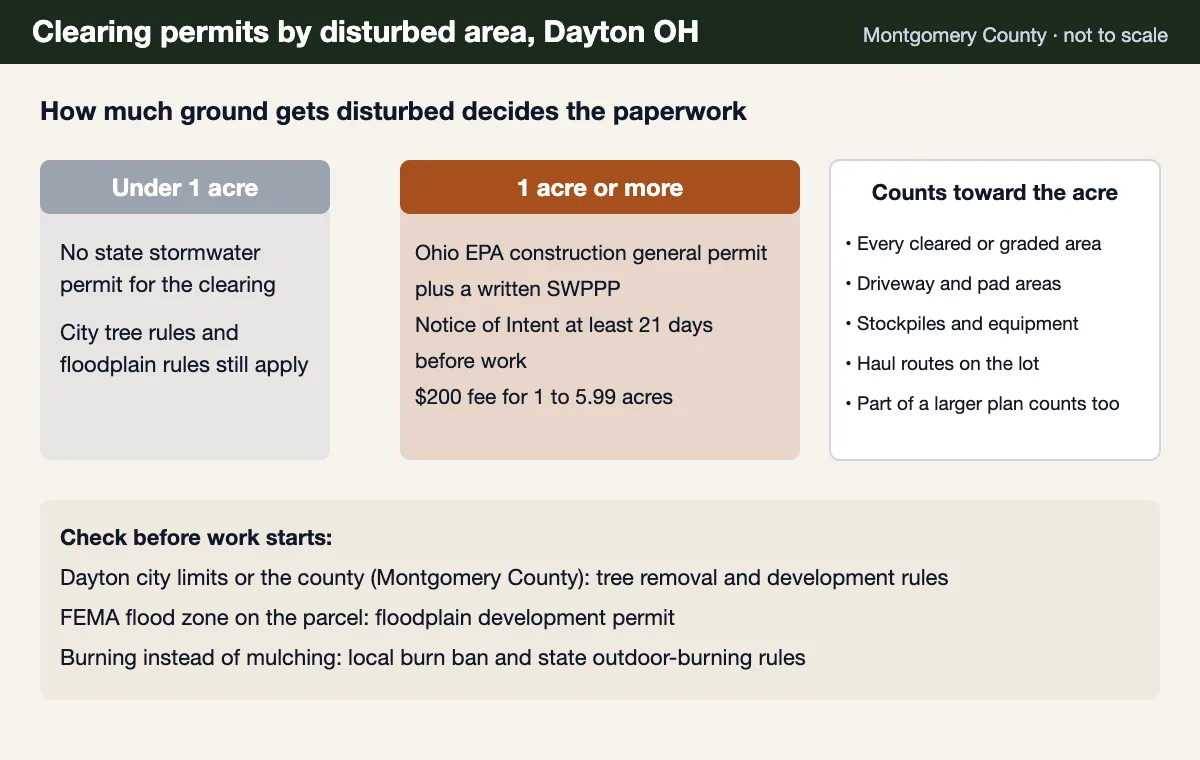
If the clearing precedes construction and the project disturbs one acre or more, or is part of a larger common plan of development or sale that will, an Ohio EPA construction stormwater permit applies and the Notice of Intent goes in at least 21 days ahead.
- 3Mark boundaries and keepers
Property pins, drainage, easements, septic areas and any trees staying get flagged. On a parcel that has been closed in for years the corners are often the hardest thing to find.
- 4Clear the understory first
The mulching head takes out brush, briars, invasive shrubs and saplings. On most Miami Valley parcels this is 80 percent of the volume and it opens the site so everything else can be seen properly.
- 5Take out the marked stems
Anything within the head’s rating that is not a keeper comes down and goes to chip in place. Larger standing timber is a separate scope and we will say so rather than force it.
- 6Spread the chip and walk it
Chip gets levelled rather than windrowed so it works as erosion cover instead of a water channel. Then we walk the finished parcel with you against the written scope.
What It Costs to Clear Land Around Dayton
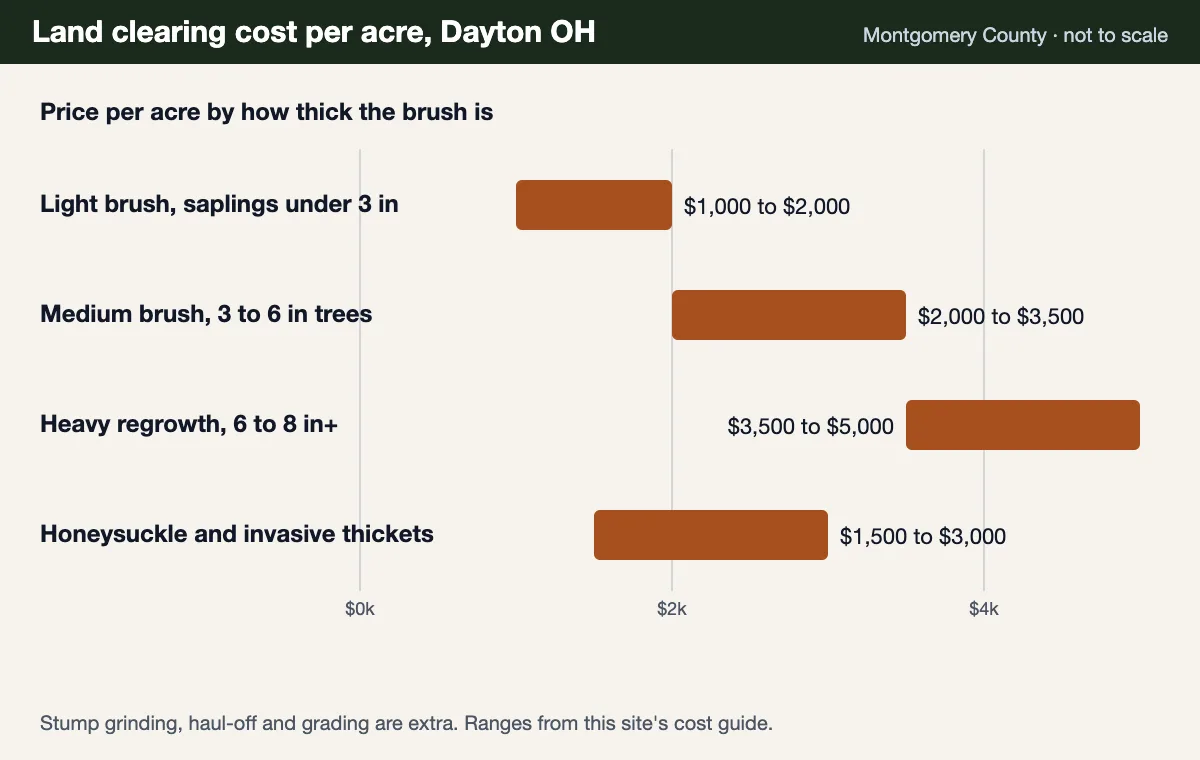
Published Ohio ranges put mulched clearing at $1,500 to $3,500 per acre for typical residential work, scaling from $1,000 to $2,000 per acre on light brush and saplings under 3 inches up to $3,500 to $5,000 or more on heavy regrowth at 6 to 8 inches and above. Day rates sit at $1,500 to $3,000 with machine and operator, covering roughly half an acre to two acres depending on how dense the stand is.
Three things push a parcel up a band more than anything else: stem diameter, stems per acre, and how much mature timber the operator has to work around. Slope and access come next. A long narrow parcel with one tight entrance costs more to clear than a square one of the same acreage, because the machine spends more of the day travelling. The full breakdown is in the forestry mulching cost guide.
- Whether the clearing is part of a construction project, which changes the permit picture
- Where the property pins actually are, since overgrown parcels lose their corners
- Whether anything has to finish at bare soil, which means grubbing rather than mulching
- How wide the access is, because a tracked carrier arrives on a trailer
- Whether the ground is in the December to April saturated window
- Which trees are keepers, flagged before a machine moves rather than after
Ground Conditions Across Montgomery County
The soils here are well documented, and Montgomery County is actually the type location for the Miamian series, the site used to define that soil nationally. Miamian soils are well drained, formed in up to 18 inches of loess over loamy till, with carbonates at 18 to 40 inches and slopes from 0 to 50 percent. On those positions a tracked machine works more or less year round.
The Miami series is the one that constrains scheduling. It is moderately well drained with a perched seasonal high water table 2 to 3 feet down from December through April, and it sits in a sequence with the somewhat poorly drained Crosby and Conover soils and the poorly drained Brookston soils in the low spots. Clearing on those in a wet February leaves ruts. Clearing on them in a frozen January is ideal. Same months, opposite outcomes, which is why we look before we book.
Land Clearing Across the Miami Valley
We clear parcels across Montgomery, Greene, Warren and Miami counties. If the material is mostly invasive shrub rather than timber, the job is really honeysuckle and invasive removal. If it is edges and fence lines rather than whole acres, it is brush and fence line clearing. And the method behind all of them is explained on the Dayton forestry mulching page. Every town we cover is listed on the service area page, and you can send a parcel address through the contact form for a free walk.