Centerville Lots and What Grows Into Them
Centerville is a Montgomery County city of 24,240 residents at the 2020 census, sitting immediately south of Kettering with Washington Township wrapped around much of it. The residential pattern is the relevant part: a lot of wooded and part wooded lots, plenty of them backing onto creek corridors and ravine edges that were never buildable and so were never cleared.
Those untouched back edges are where the work is. Ground that nobody mows and nobody walks fills in with bush honeysuckle, multiflora rose, briars and volunteer saplings within a few years, and then keeps thickening. The give away is seasonal: OSU Extension notes that invasive bush honeysuckle leafs out earlier in spring and retains its leaves later into fall than most native trees and shrubs, so in late November a Centerville back edge full of honeysuckle is a solid green band against bare woods.
Slope, Ravines and Why Mulching Suits Them
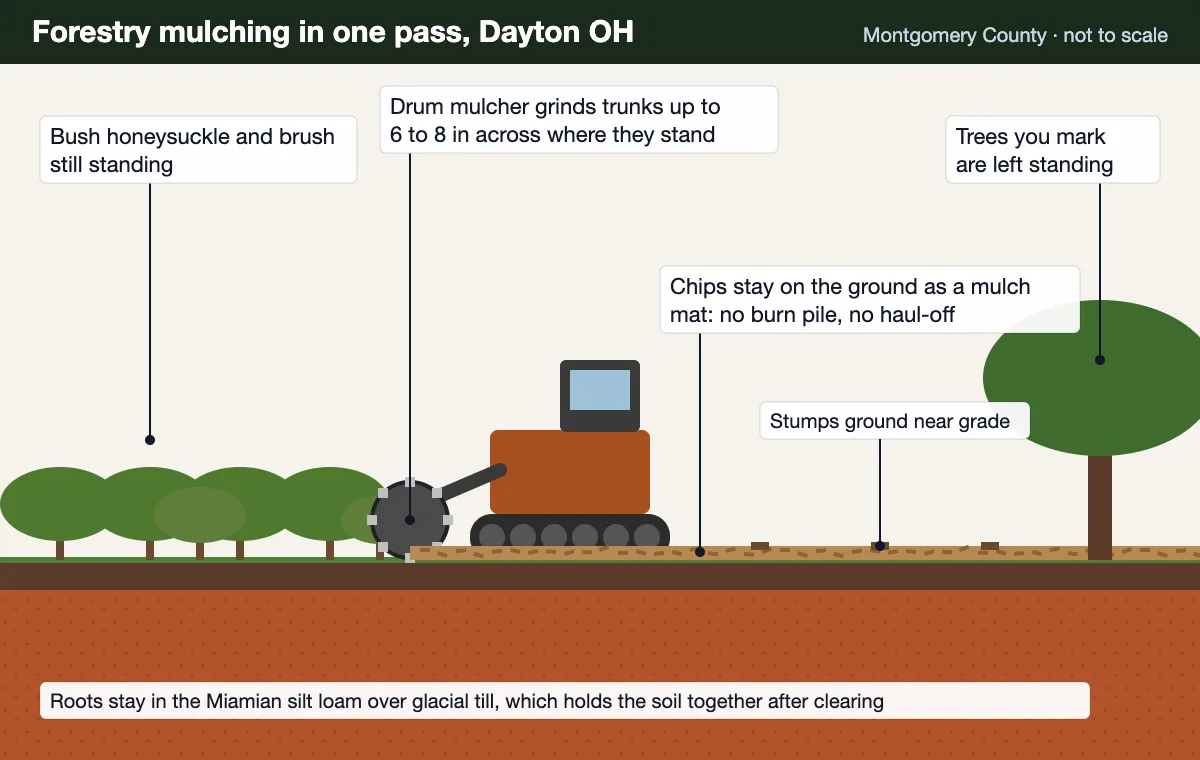
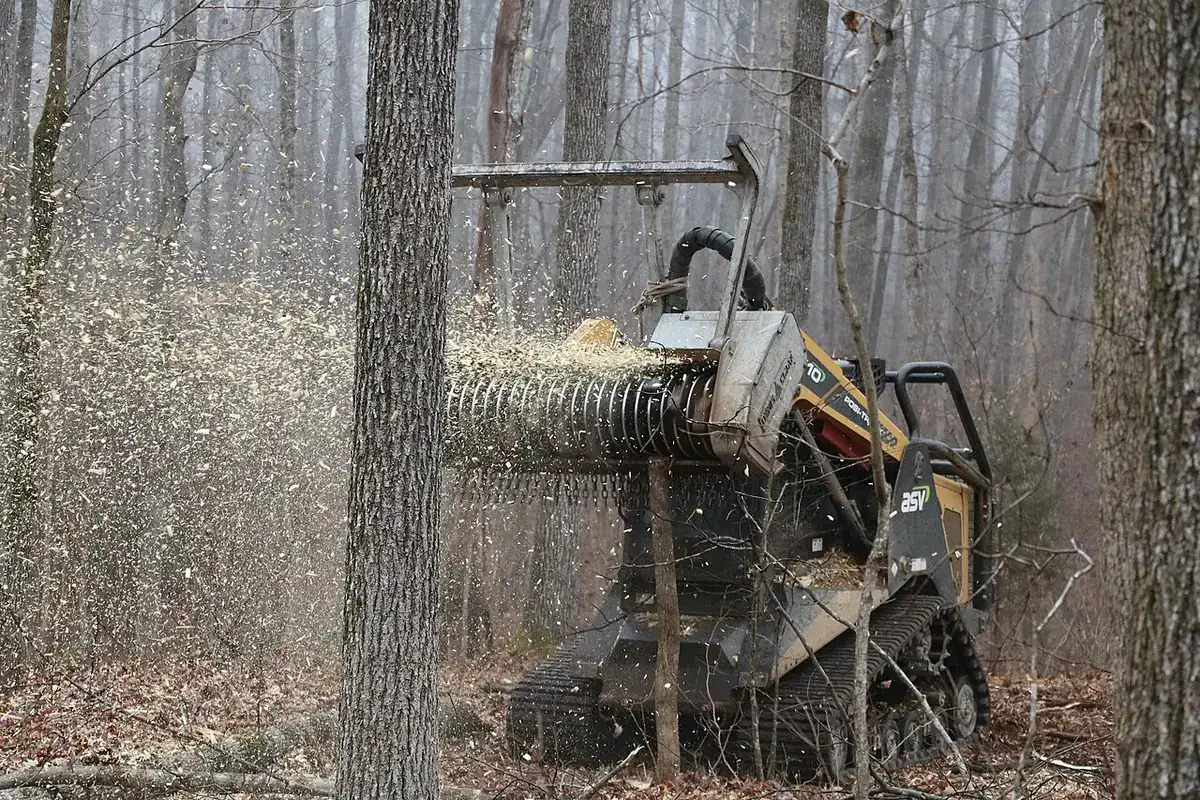
A lot of Centerville back lots fall away toward a drainage way, and slope is where method matters most. Anything that scrapes or pushes leaves bare disturbed soil on a grade, which is how you get a washout after the next real storm. Mulching leaves the root systems in the ground and spreads a chip layer across the surface, so the ground is covered from the moment the machine leaves.
The constraints are the carrier’s safe working angle and ground moisture. Both get checked on the walk, and if a section is too steep or too wet to work safely we will tell you that rather than find out the hard way.
- How the machine gets from the street to the back of the lot, and the narrowest point on that route
- Where the rear property line actually runs, since overgrown edges lose their pins
- Whether any part of the work is on a slope or close to a drainage way
- Whether the shrub layer is still green in late November, which points to honeysuckle
- Which trees are keepers, and whether any mature tree needs a tree service instead
Pricing a Small Wooded Lot
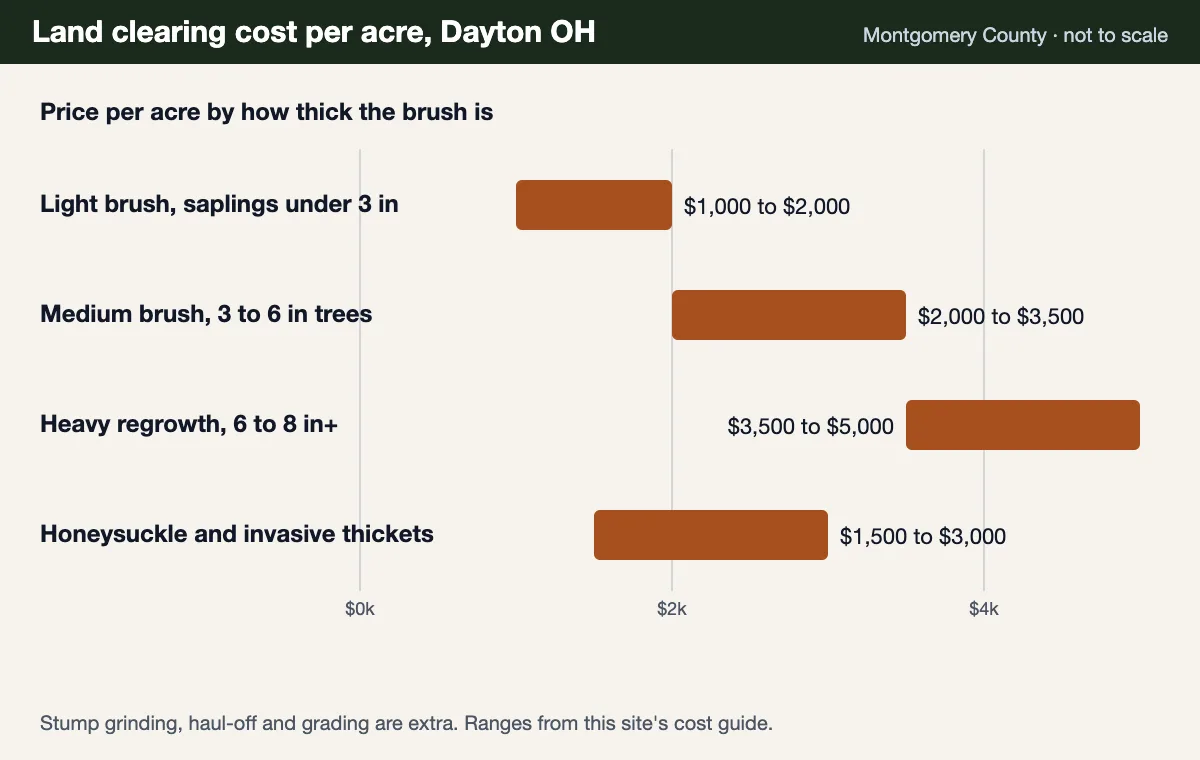
Most Centerville jobs are under an acre, which means the published Ohio per acre bands are not the right unit. These land on the $500 to $1,000 mobilisation minimum, which is the cost of getting a tracked machine to a suburban street and back. Where an area is large enough to measure properly, invasive thicket work is published at $1,500 to $3,000 per acre and light brush with saplings under 3 inches at $1,000 to $2,000. The full breakdown sits in the cost guide.
If the Problem Is Honeysuckle, Read This First
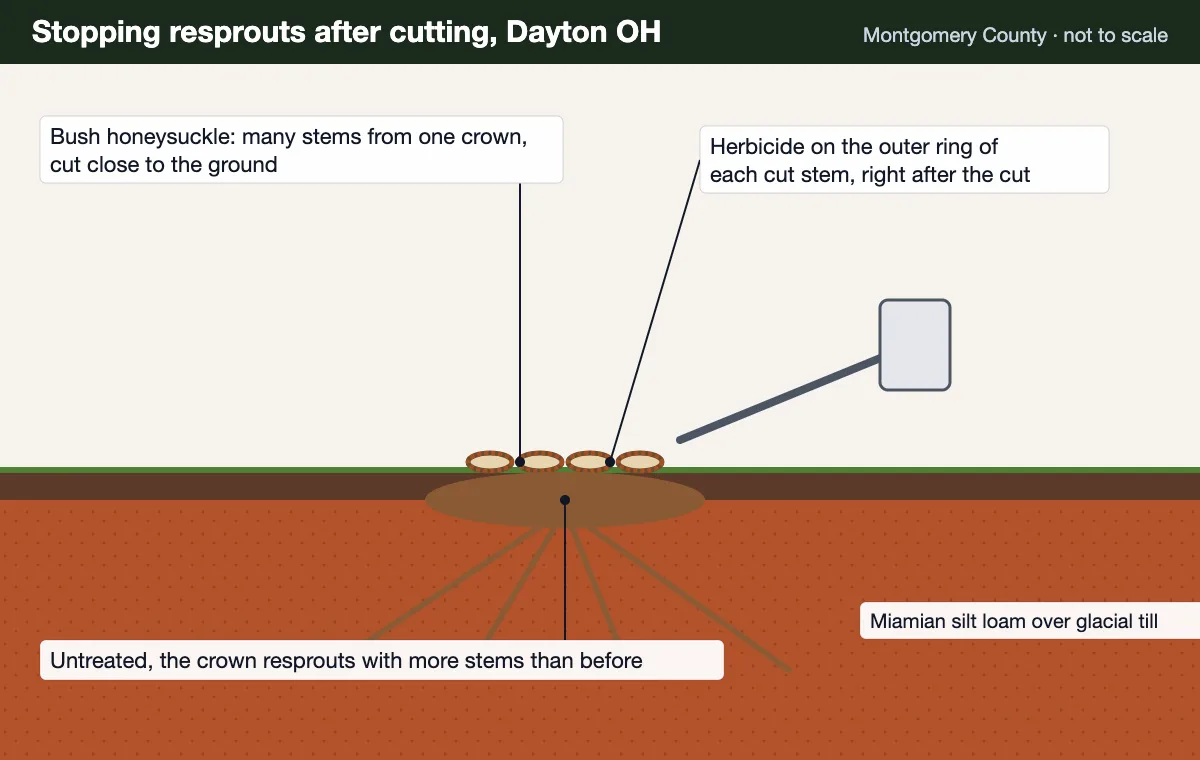
Most Centerville back lot work is invasive rather than ordinary brush, and the honest version is that one pass clears the stand without ending it. OSU Extension states that simply cutting the shrub off at the base will cause prolific sprouting and increase the number of stems. We plan for that instead of ignoring it. The approach is set out on the honeysuckle removal page, and the identification and control detail is in the bush honeysuckle guide. For the method generally, see forestry mulching in Dayton OH. Centerville is listed with every other town we cover on the service area page, and you can send your address through the contact form.